

-
1. Who among the following is ineligible to obtain a Kentucky driver's license?
Show answer
Answer: b) Anyone whose license is currently suspended or revoked.
You are not eligible for a license if your license is currently suspended or revoked.
-
2.
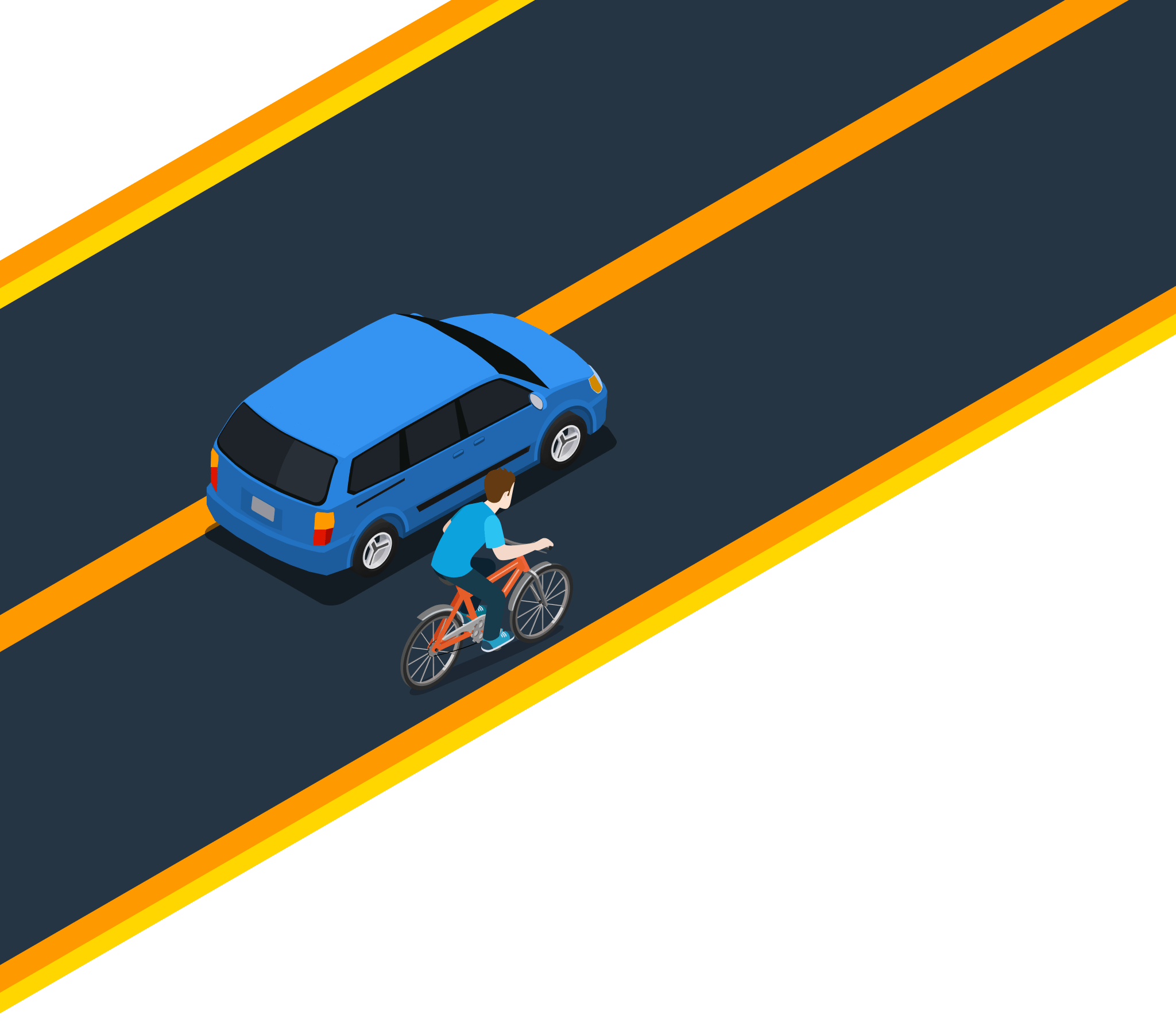 What is the recommended minimum distance to allow when passing a bicyclist?
Show answer
Answer: d) 3 feet.
At least three feet of space is recommended when passing bicyclists.
-
3. What is the minimum recommended following distance when following a motorcyclist?
Show answer
Answer: b) 4 seconds.
When following a motorcyclist, allow for a minimum 4-second following distance, or more in wet conditions.
-
4. When backing up, especially in parking lots, what should you be particularly checking for?
Show answer
Answer: a) Pedestrians.
Check for pedestrians in your path before backing, especially in parking lots or places where there are many pedestrians.
-
5. Are autocycle operators required to wear a helmet?
Show answer
Answer: d) No, they are exempt from headgear requirements.
An operator of an autocycle is exempt from any headgear requirements.
-
6. When must you dim your high beam headlights for an oncoming vehicle?
Show answer
Answer: d) When within 500 feet.
You must dim your lights whenever you come within 500 feet of oncoming vehicles to avoid blinding the other driver.
-
7. What is the minimum visual acuity required in at least one eye to drive in Kentucky?
Show answer
Answer: b) 20/60
Drivers in Kentucky must have a visual acuity of 20/60 or better in at least one eye.
-
8. Which of the following is a warning sign that an aging driver may need a driving evaluation?
Show answer
Answer: a) Getting lost on routes that were once familiar.
A warning sign for aging drivers is getting lost while driving on routes that were once familiar.
-
9. At what Blood Alcohol Content (BAC) level is vision impacted for all drivers?
Show answer
Answer: b) 0.02 BAC.
Vision, the most important sense for driving, is impacted at 0.02 BAC for all drivers.
-
10. How can over-the-counter drugs for colds or allergies affect your driving?
Show answer
Answer: c) They can make you drowsy.
Many over-the-counter drugs, such as those for colds or allergies, can cause drowsiness and affect your ability to drive.
-
11. What is defined as a 'Manual Distraction' while driving?
Show answer
Answer: b) Tasks requiring you to take hands off the steering wheel.
Manual distraction involves taking one or both hands off the steering wheel to manipulate a device or object.
-
12. When an airbag deploys, what is the powder-like substance that may fill the vehicle?
Show answer
Answer: c) A drying agent used for the airbag.
Airbag deployment often releases a powder-like substance. This is a drying agent used in the manufacturing of the airbag and should not be mistaken for smoke.
-
13. What is the fine for violating the Child Restraint Law in Kentucky?
Show answer
Answer: d) $50 plus a $10 fee.
Violators face a $50 fine plus a $10 fee which goes to the Traumatic Brain Injury Trust Fund.
-
14. When adjusting your seating position, how high should the top of the steering wheel be?
Show answer
Answer: a) No higher than the top of your shoulders and below chin level.
To ensure proper control and visibility, you should adjust your seat so the top of the steering wheel is below your chin and no higher than your shoulders.
-
15. What is the recommended foot position for smooth acceleration?
Show answer
Answer: b) Heel on the floor.
For smooth acceleration, press the pedal gradually with the top of your foot while keeping your heel on the floor.
-
16.
 What does this sign warn of?
Show answer
Answer: a) Sharp Right Turn.
This is a warning sign for a Sharp Right Turn (implied from 'Some common warning signs' context and standard shape).
-
17.
 What does this sign warn of?
Show answer
Answer: d) Left Curve.
This is a warning sign for a Left Curve.
-
18.
 What does this sign indicate?
Show answer
Answer: b) Low Clearance.
This is a warning sign for Low Clearance.
-
19. When can you proceed at a railroad crossing with flashing red lights?
Show answer
Answer: c) When the lights stop flashing and you determine no train is approaching.
Stop and proceed only after the red lights stop flashing and you determine no train is approaching.
-
20. What should you ensure before entering a railroad crossing?
Show answer
Answer: a) That there is ample space to get completely across and off the tracks.
Never attempt to cross a railroad crossing until there is ample space to get completely across and off the tracks. Stopping on a crossing is dangerous.
-
21. Can you turn left on red from a two-way street?
Show answer
Answer: a) No.
Left turns on red are permitted only when turning from a one-way street onto a one-way street.
-
22.
 What does this sign warn of?
Show answer
Answer: d) Winding Road.
This is a warning sign for a Winding Road.
-
23. What is the primary purpose of warning signs?
Show answer
Answer: a) To alert the driver of possible danger and to slow down.
Warning Signs tell a driver of possible danger that might be ahead, and alert the driver to slow down and be prepared to stop if necessary.
-
24. How should you cross railroad tracks?
Show answer
Answer: b) Look both ways and cross quickly without stopping.
When you need to cross railroad tracks, look both ways and cross the tracks quickly, without stopping.
-
25.
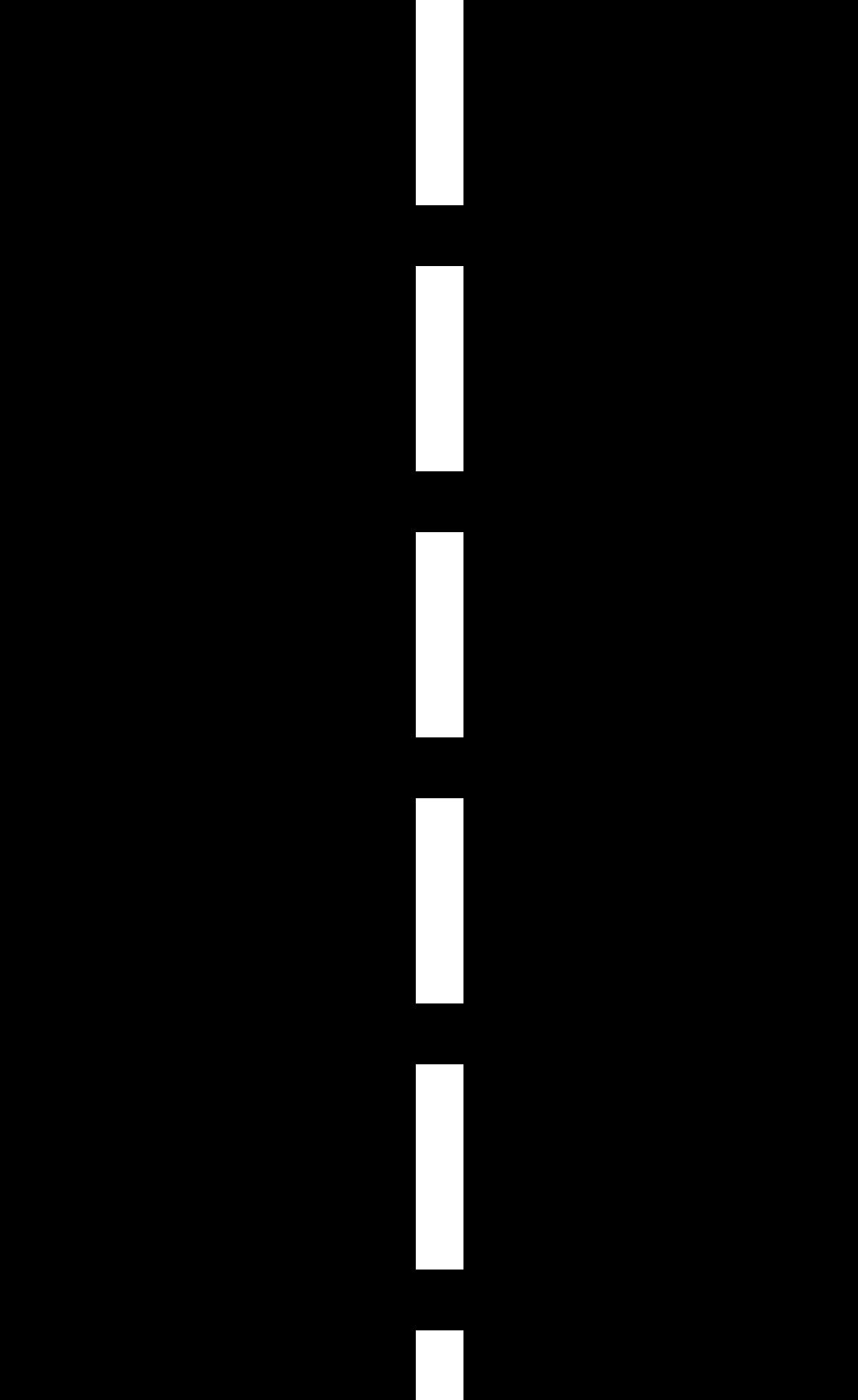 What do broken white lane markings indicate?
Show answer
Answer: d) One-direction roadway where passing is permitted.
White lane markings indicate a one-direction roadway. If broken/dashed, passing is permitted.
-
26.
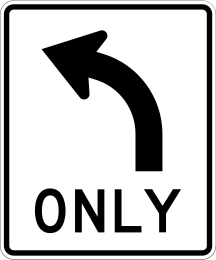 What does this sign mean?
Show answer
Answer: c) Left Turn Only.
This sign indicates LEFT TURN ONLY.
-
27.
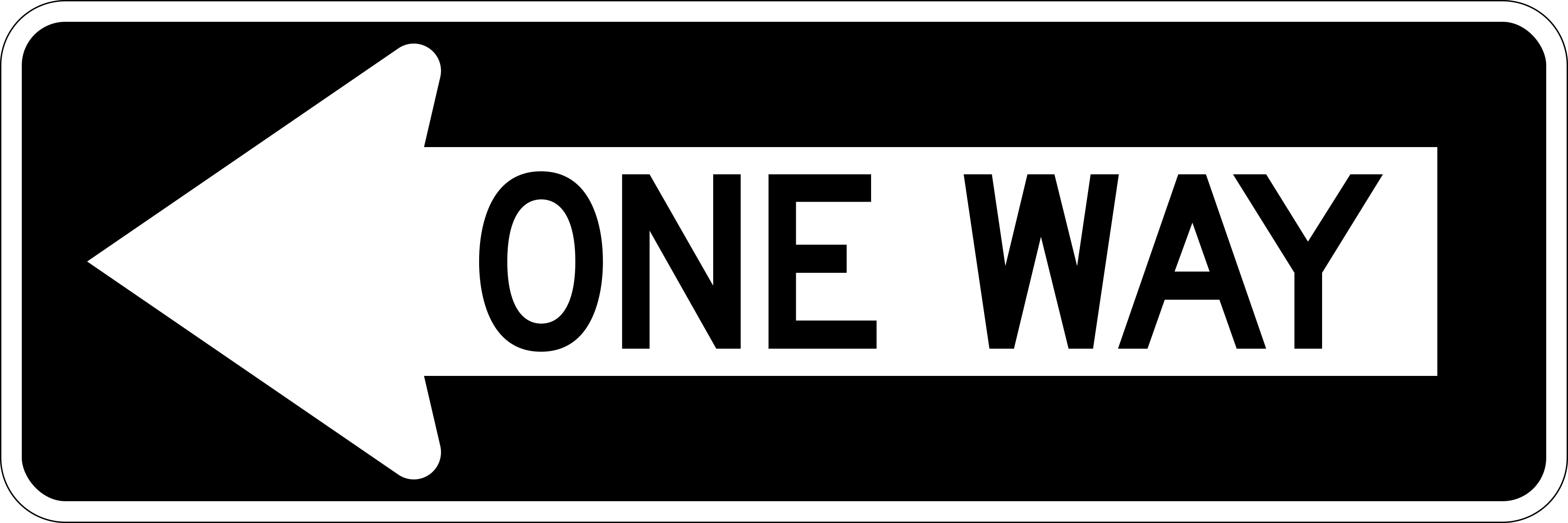 Identify this sign.
Show answer
Answer: b) One Way
This is a ONE WAY sign.
-
28.
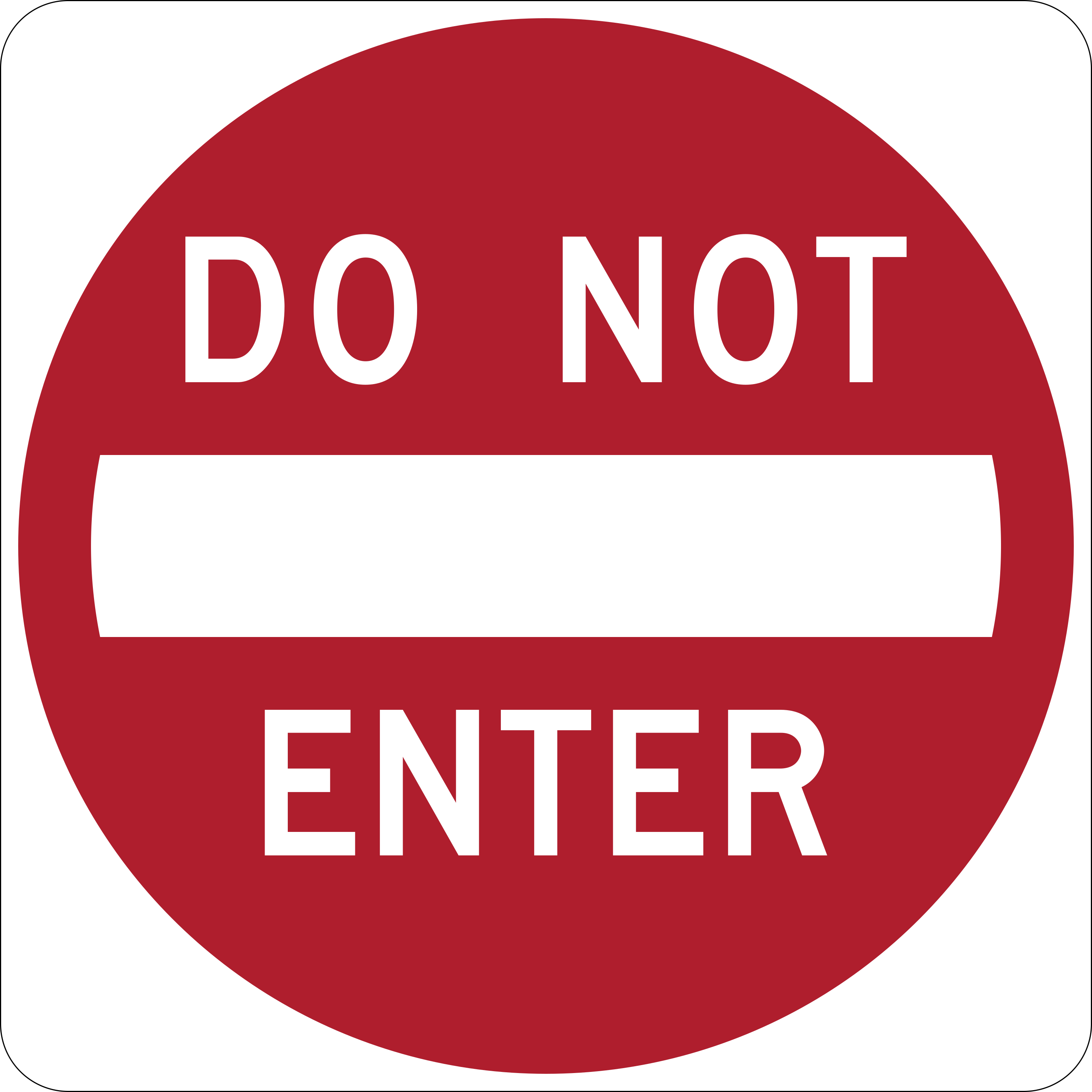 Identify this sign.
Show answer
Answer: a) Do Not Enter
This sign indicates DO NOT ENTER.
-
29. What does the standard color yellow indicate on a traffic sign?
Show answer
Answer: b) General warning.
Yellow is used on traffic signs to provide a general warning to drivers.
-
30. What does a round traffic sign indicate?
Show answer
Answer: b) Railroad and advance warning.
A Round sign indicates Railroad and advance warning.
-
31.
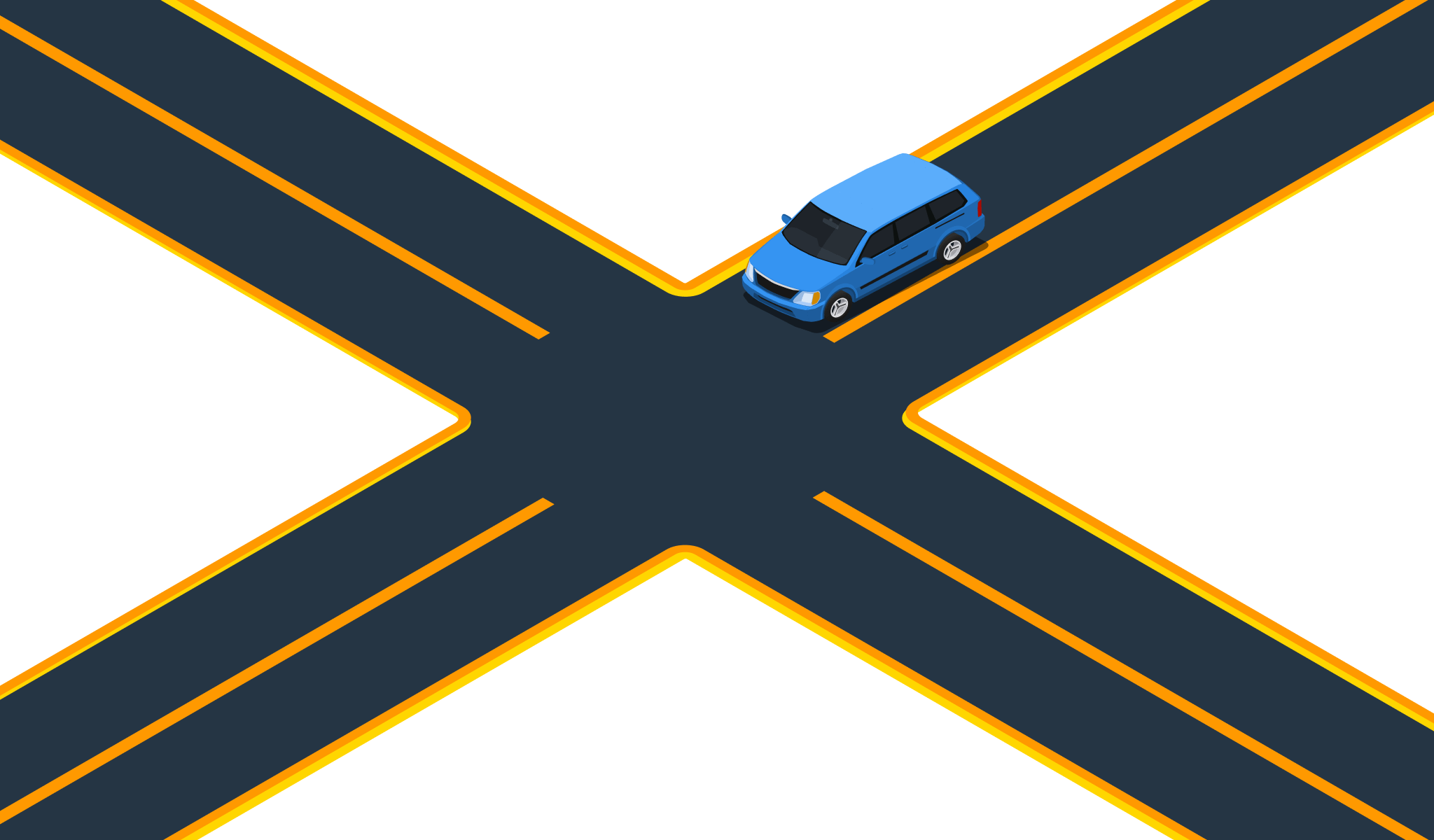 How should you proceed if your view of a cross street is blocked by an obstruction?
Show answer
Answer: c) Edge forward slowly until you can clearly see.
If your view is blocked, edge forward slowly until you can clearly see before proceeding.
-
32. Which lane should you enter when turning into another street?
Show answer
Answer: b) The lane nearest to you.
When turning into another street, you should always turn into the lane nearest to you.
-
33.
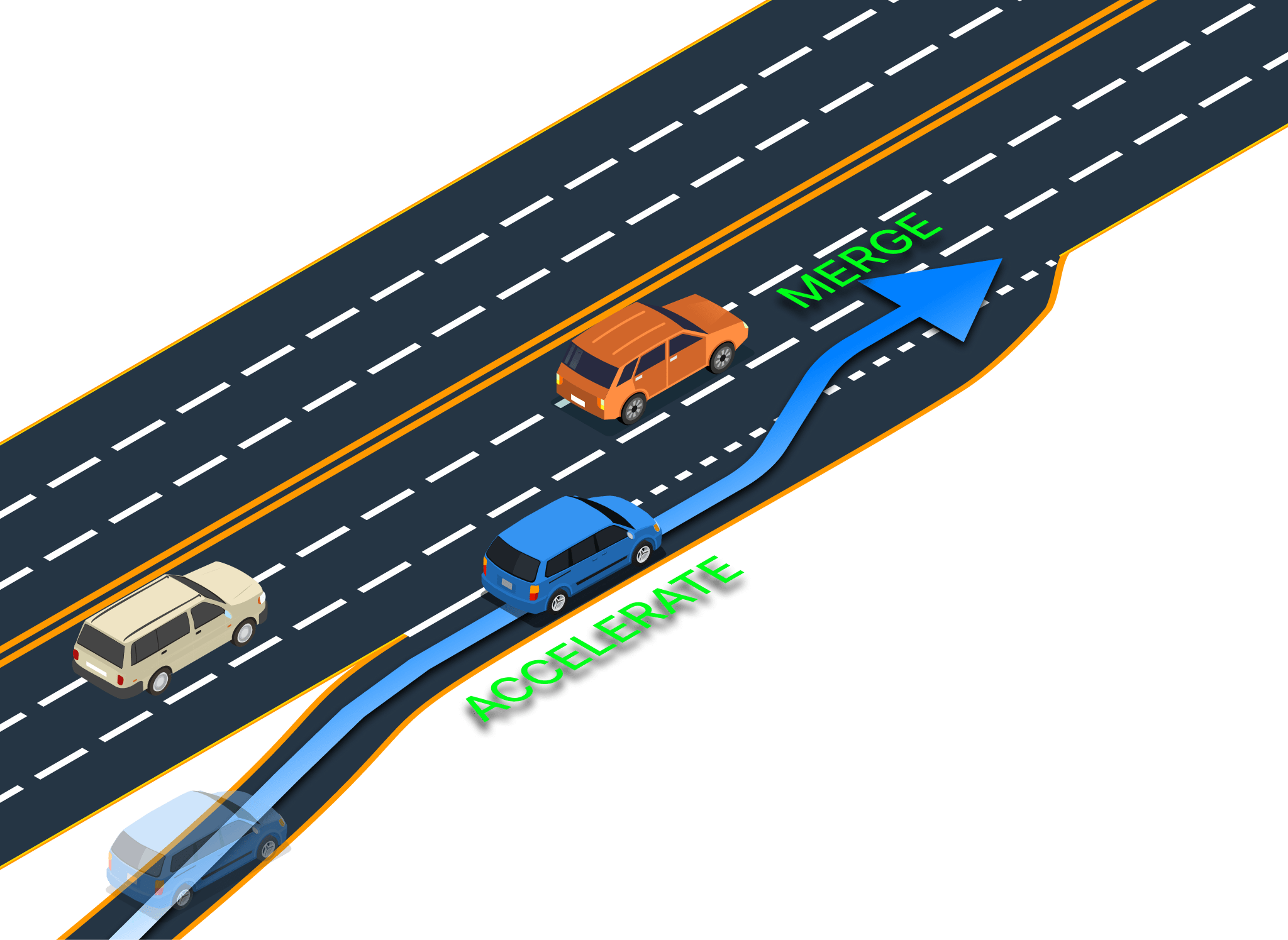
 What is the purpose of an acceleration lane when entering a highway?
Show answer
Answer: a) To reach the speed of other vehicles before merging.
Use the acceleration lane to increase your speed to match that of the other vehicles before pulling onto the roadway.
-
34. What should you do if the driver in front of you is signaling for a turn?
Show answer
Answer: b) Do not signal unless you are also going to turn.
You should not signal just because the vehicle ahead is signaling. Signal only if you also intend to turn.
-
35. What is the recommended observation pattern before entering an intersection after stopping?
Show answer
Answer: d) Look left, then right, and left again.
Take extra time to check for crossing traffic. Look left, then right, and then left again before entering the intersection.
-
36. What is a recommended safety tip for backing up?
Show answer
Answer: c) Use a person outside the vehicle to guide you if possible.
Backing is dangerous. If possible, have someone outside guide you.
-
37. How should you manage your speed when driving at night?
Show answer
Answer: a) Drive slow enough to stop within the distance illuminated by your headlights.
At night, you must be able to stop within the distance you can see with your headlights to ensure you can react to hazards.
-
38. Which headlights should you use when driving in rain, fog, or snow?
Show answer
Answer: a) Low beam headlights.
Use low beam headlights in rain, fog, or snow to improve visibility and avoid glare.
-
39. If your vehicle breaks down, how far behind the vehicle should you place emergency flares?
Show answer
Answer: b) 200 to 300 feet.
Place flares about 200 to 300 feet behind the vehicle to warn other drivers in time.
-
40. What is the recommended action if an animal suddenly runs in front of your vehicle?
Show answer
Answer: a) Brake and steer to miss the animal.
 Utilizing braking and steering is a good way to avoid obstacles like animals. Brake and steer to miss the animal.
Keep practicing in the app
Practice Test 1 is one of 10. The app has 354 more Kentucky questions, an exam simulator, and review of the questions you miss.


Free download · ★ 4.9 from 65 App Store ratings
Pass Guarantee Don't pass? Your next month is free.