

-
1. What is a potential danger of driving much slower than the flow of traffic?
Show answer
Answer: d) It encourages other vehicles to constantly pass you, increasing crash risk.
Driving slower than other traffic can be dangerous because it encourages constant passing by other vehicles, which increases the likelihood of a crash.
-
2.
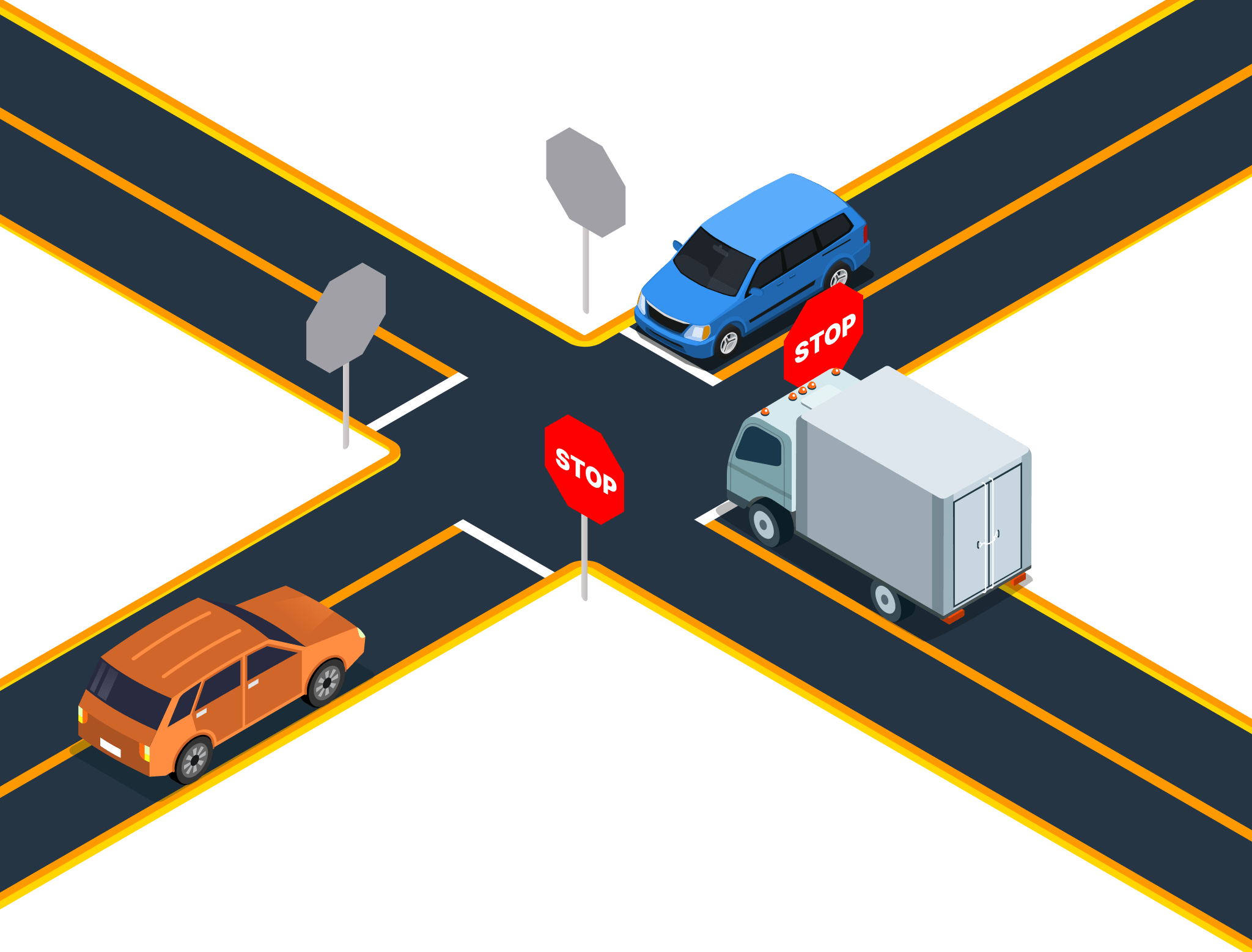 Two vehicles arrive at a four-way stop at the same time. Who has the right-of-way?
Show answer
Answer: c) The driver on the right.
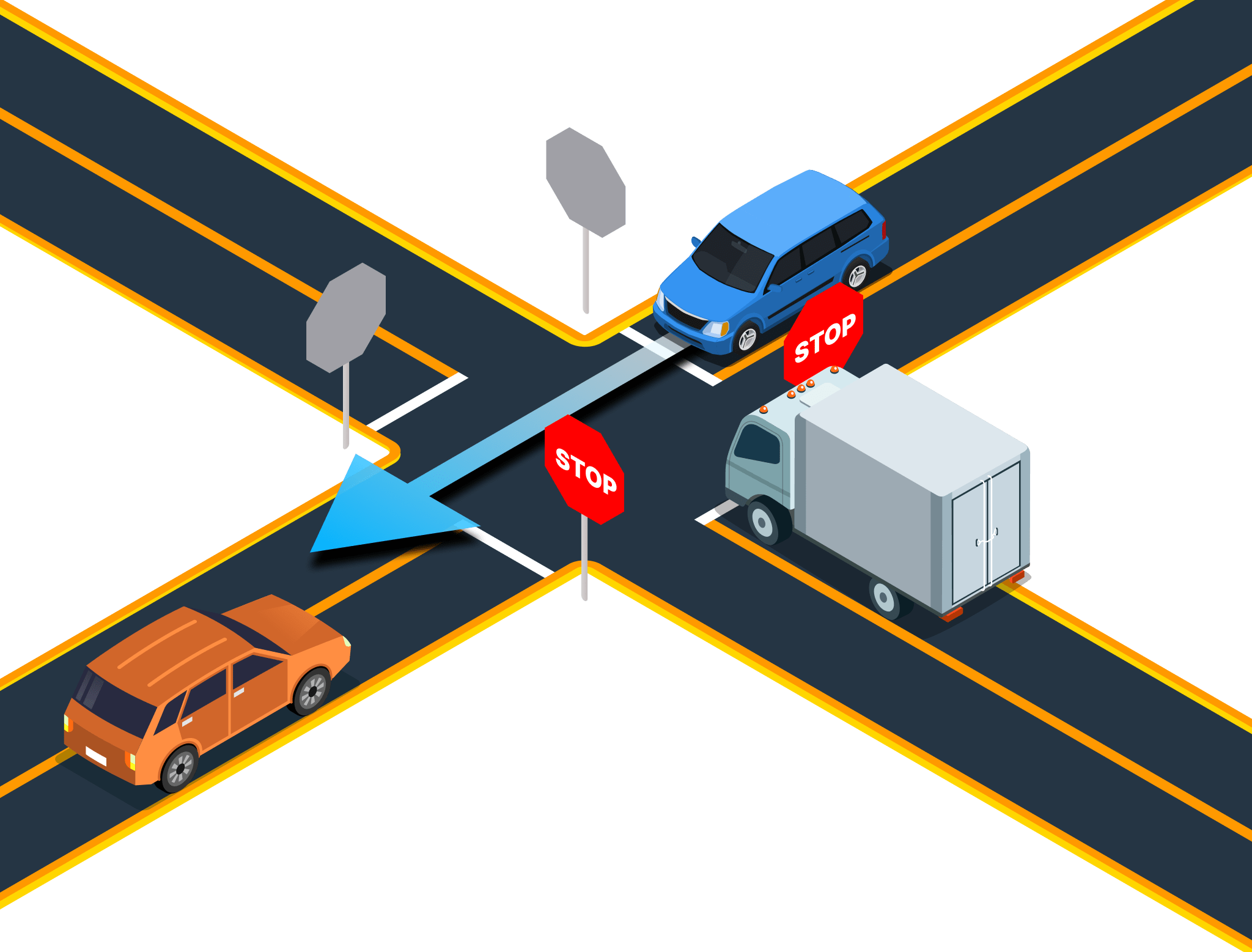 If two vehicles arrive at an intersection at the same time, you must yield to the driver on your right.
-
3.

 How should you treat a flashing red signal?
Show answer
Answer: b) As a stop sign.
A flashing red signal requires you to come to a complete stop, yield to traffic and pedestrians, and proceed only when the way is clear, just like a stop sign.
-
4.
 What should a pedestrian do when facing a steady hand symbol?
Show answer
Answer: b) Stop and push the button to cross.
A steady hand symbol tells pedestrians to stop and push the button to request a crossing signal.
-
5.
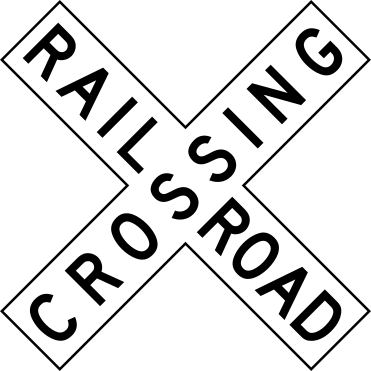 What is the name and meaning of an X-shaped sign?
Show answer
Answer: a) Crossbuck; railroad crossing location.
The X-shaped sign is called a Crossbuck and identifies the location of a highway-rail grade crossing.
-
6.
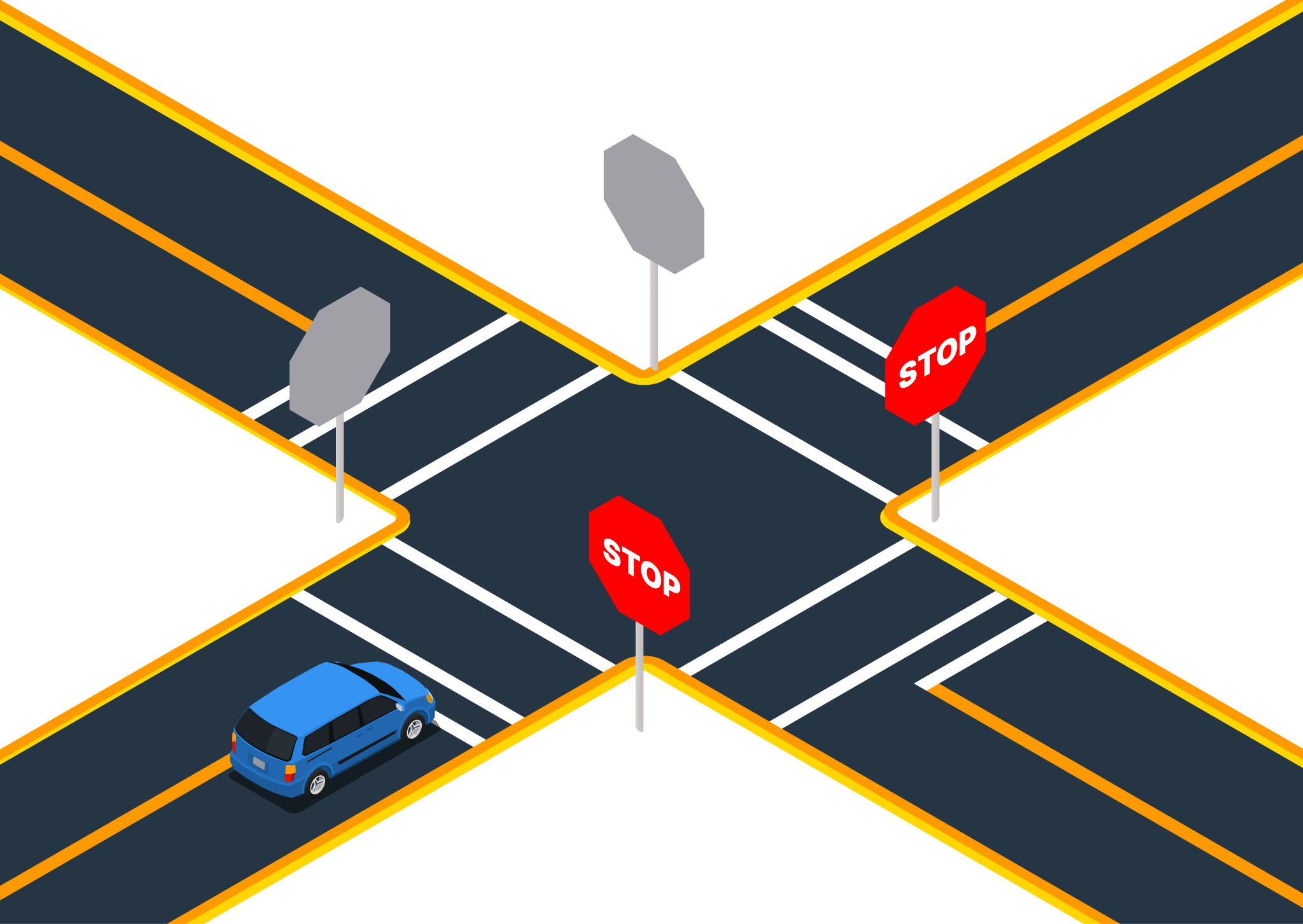 Where must you stop at a stop sign if there is a painted stop line?
Show answer
Answer: a) At the stop line.
At a stop sign, you must come to a complete stop at the stop line.
-
7.
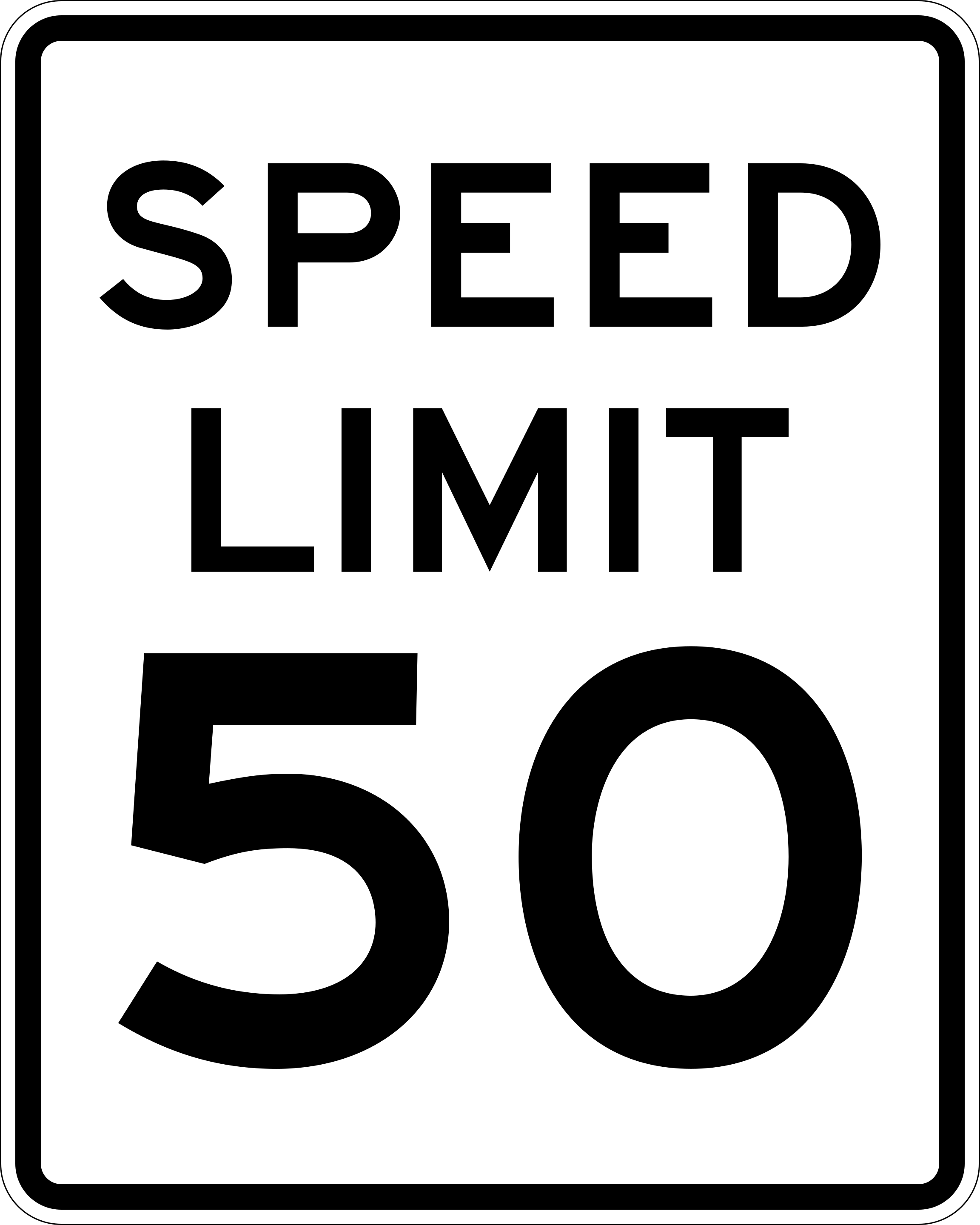 What does a speed limit sign indicate?
Show answer
Answer: c) The maximum speed allowed.
A speed limit sign displays the maximum legal speed for that section of the road.
-
8.
 What does this sign signify?
Show answer
Answer: c) The divided road ends ahead.
This sign warns that the divided highway is ending and the road will become a two-way street without a barrier.
-
9. How are mile marker signs useful to drivers?
Show answer
Answer: c) They provide location information for emergency assistance.
Mile markers provide precise location information that helps emergency personnel or tow trucks find you.
-
10. How does the risk of death change in a crash at 65 miles per hour compared to 45 miles per hour?
Show answer
Answer: d) It is more than twice as likely to result in death.
Crashes on roads with speed limits of 65 miles per hour or higher are more than twice as likely to result in death compared to those at 45 or 50 miles per hour.
-
11.
 What does this symbol warn of?
Show answer
Answer: c) Roundabout ahead.
This symbol warns drivers that they are approaching a roundabout.
-
12.
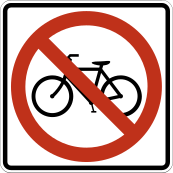 What does this sign indicate?
Show answer
Answer: d) No Bicycles allowed.
This sign indicates that bicycles are prohibited from using the roadway.
-
13.
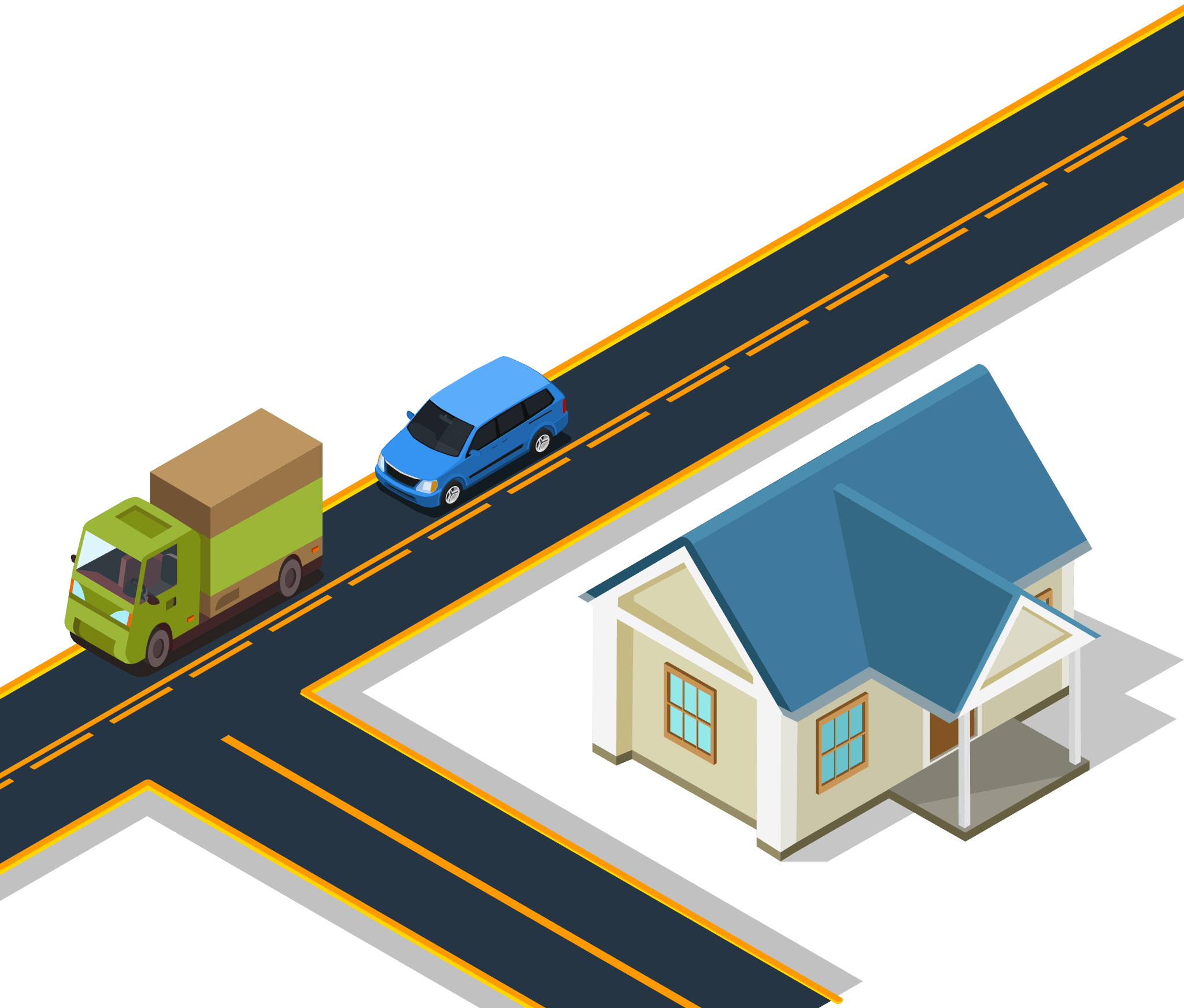 Where should yellow pavement markings be positioned relative to your vehicle?
Show answer
Answer: d) On your left side.
Yellow pavement markings should always be on your left side. They mark the left edge of the road and divide traffic going in opposite directions.
-
14. What is the first thing you should do if your vehicle begins to skid?
Show answer
Answer: d) Release the accelerator or brake pedal.
To regain control during a skid, release the accelerator or brake pedal (whichever you are using) immediately.
-
15.
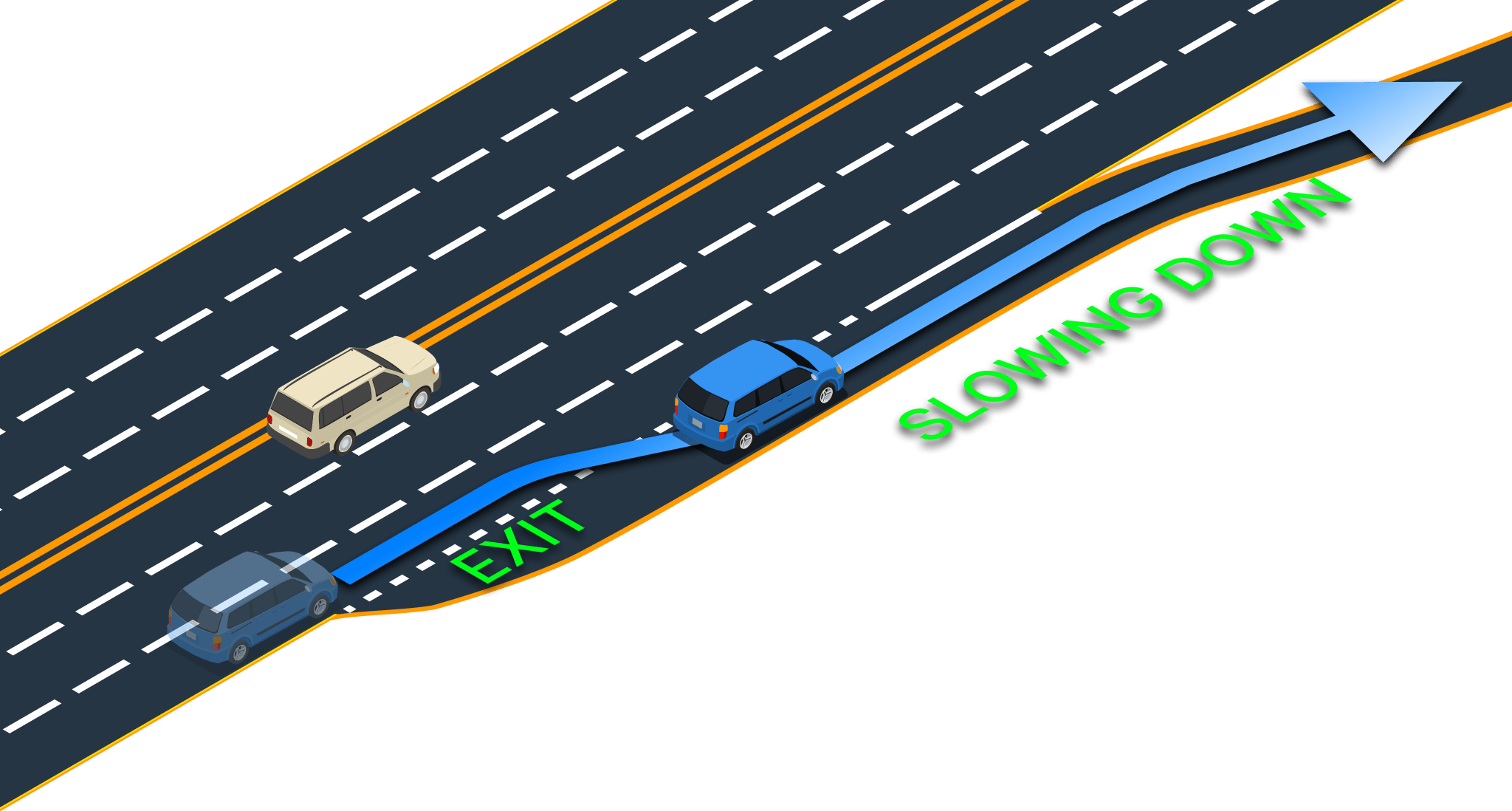
 When exiting a highway, when should you start slowing down?
Show answer
Answer: c) As soon as you enter the deceleration lane.
Move to the deceleration lane and start slowing down immediately to a safe speed for the exit ramp.
-
16. What equipment might be required on designated snow emergency routes during a declared emergency?
Show answer
Answer: d) Chains, snow tires, or radial tires.
During a declared snow emergency, you must use chains, snow tires, or radial tires on designated routes.
-
17. What should you check for on a medication label before driving?
Show answer
Answer: d) Warnings about driving or operating heavy machinery.
Always check labels for warnings against driving or operating machinery.
-
18. What is a tip to avoid becoming involved in an aggressive driving incident?
Show answer
Answer: b) Yield the right-of-way.
Yielding the right-of-way and being courteous helps avoid aggressive driving incidents.
-
19. Where is it illegal to transport an open container of alcohol?
Show answer
Answer: c) In the passenger area.
Open containers of alcohol are prohibited in the passenger area of the vehicle.
-
20. Which of the following is considered an open alcohol container?
Show answer
Answer: d) A six-pack with missing bottles in the passenger area.
A package with missing or open bottles/cans is considered an open container.
-
21.
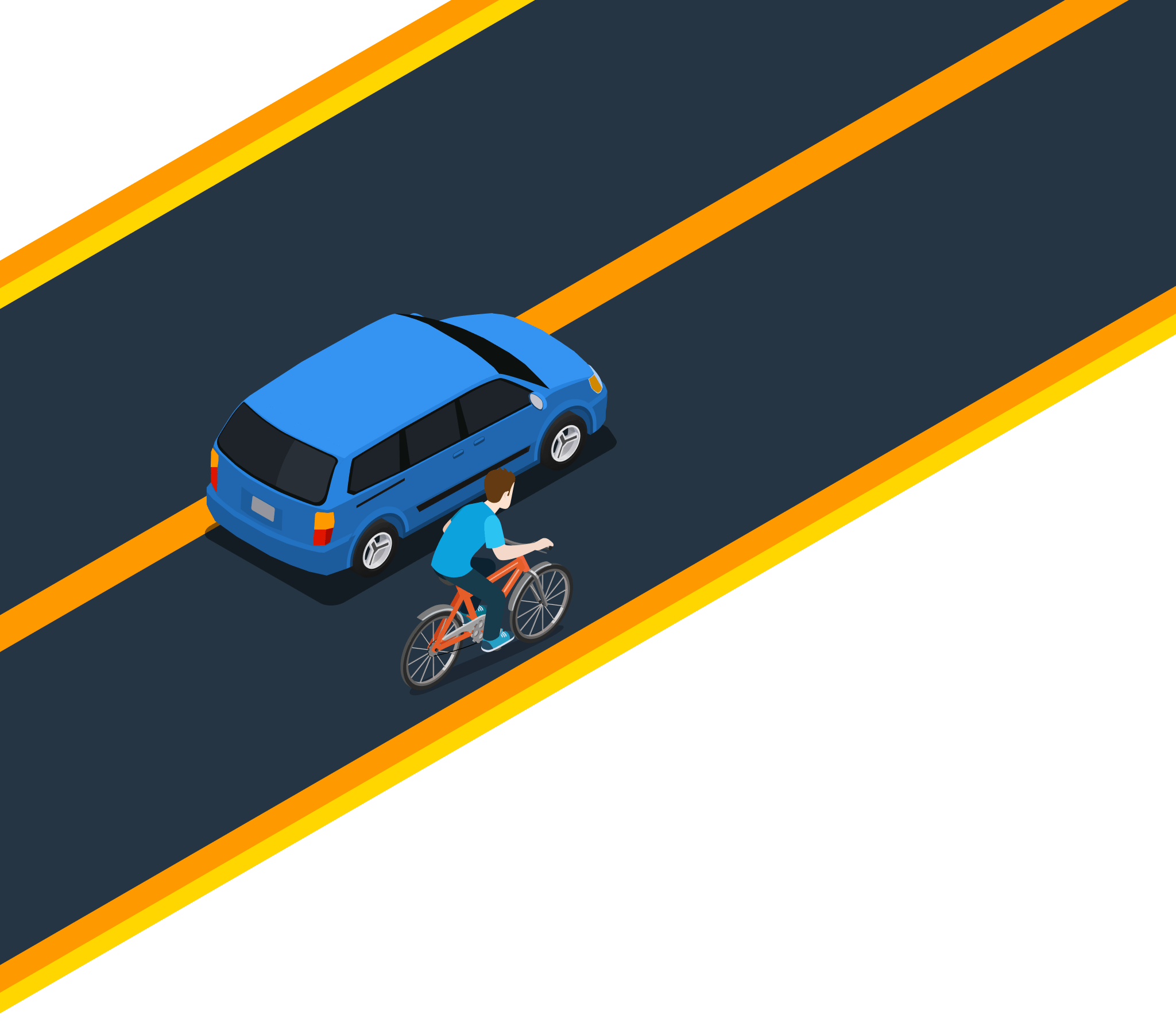 What is the minimum distance you must leave when passing a bicyclist?
Show answer
Answer: b) At least 3 feet.
Drivers must leave at least 3 feet of clearance when passing a bicyclist to ensure safety.
-
22. Where should moped and scooter operators ride on the road?
Show answer
Answer: a) As close to the right side of the road as safely possible.
Operators of mopeds and scooters should position themselves near the right edge of the roadway for safety.
-
23. How fast can experienced bicyclists travel on the road?
Show answer
Answer: d) Up to 35 mph.
Drivers should never assume a bicyclist is moving slowly. Experienced riders can travel as fast as 35 mph, which may make them appear closer than you expect when you are at an intersection or driveway.
-
24. Leaving the scene of a crash where someone dies is considered what type of crime?
Show answer
Answer: c) A felony.
Leaving the scene of a crash where someone dies is a felony. Penalties include up to 10 years in prison and a fine of up to $10,000.
-
25. Can a vehicle with a valid disability placard park in the access aisle next to a disability parking space?
Show answer
Answer: b) No, parking in an access aisle is prohibited.
Parking on any part of an access aisle is prohibited, even if you display a valid disability license plate or placard.
Keep practicing in the app
Practice Test 1 is one of 10. The app has 216 more Maryland questions, an exam simulator, and review of the questions you miss.


Free download · ★ 4.9 from 65 App Store ratings
Pass Guarantee Don't pass? Your next month is free.