

-
1.
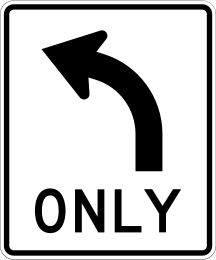 What is the meaning of this sign?
Show answer
Answer: c) You MUST turn left.
This sign means you MUST TURN LEFT.
-
2.
 What does this sign warn you about?
Show answer
Answer: a) A side road enters from the right.
SIDE ROAD ahead (on right).
-
3.
 What does this sign indicate?
Show answer
Answer: a) Divided highway ahead.
DIVIDED HIGHWAY ahead.
-
4. What is the speed limit in a school zone when children are present or during opening and closing hours?
Show answer
Answer: a) 15 miles per hour.
In a school zone, the speed limit is fifteen miles per hour when passing a school during recess or while children are arriving at or leaving school during opening and closing hours.
-
5.
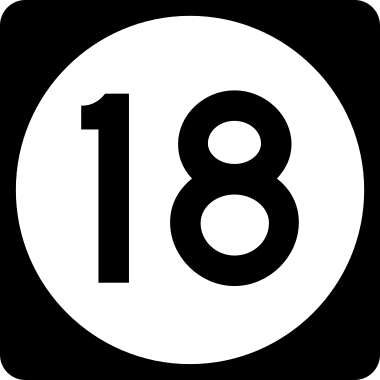 What does this route marker indicate?
Show answer
Answer: c) State Route (State Highway).
State Route (State Highway)
-
6. What does a fluorescent or reflective orange and red triangle emblem on the rear of a vehicle indicate?
Show answer
Answer: d) Slow-moving vehicle traveling 25 mph or less.
This emblem identifies SLOW-MOVING VEHICLES (vehicles that travel twenty-five miles per hour or less).
-
7. Why should you not use your horn or rev your engine near a horse on the road?
Show answer
Answer: a) It may scare the horse and cause a crash.
Do not use your horn or “rev” the engine because this may scare the horse and cause a crash.
-
8. When turning left at a solid green light, what must you do?
Show answer
Answer: d) Yield to oncoming traffic.
EXCEPTION: If you are turning left, the solid green light means you must YIELD TO ONCOMING TRAFFIC.
-
9.
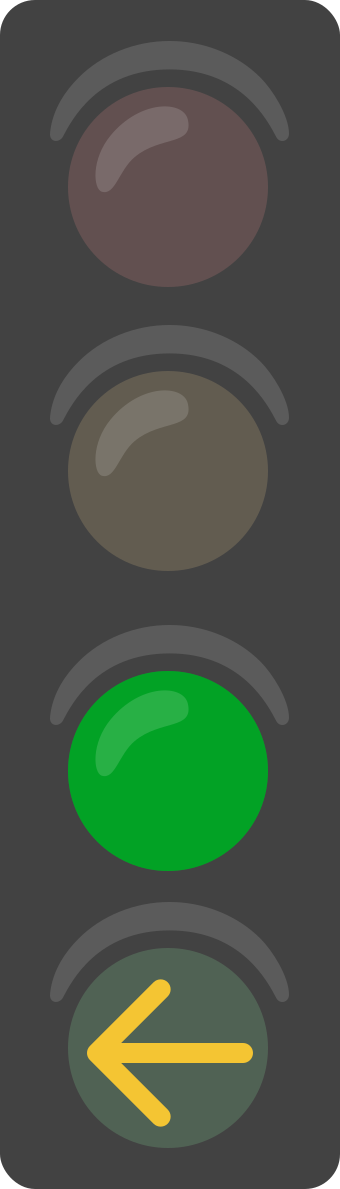 What must you do at a yellow flashing arrow?
Show answer
Answer: b) Yield to oncoming traffic, then turn.
A YELLOW FLASHING ARROW means you may turn in the direction of the arrow if you are in the proper lane. You must YIELD TO ONCOMING TRAFFIC.
-
10.
 If you see the color blue on a traffic device, what does it indicate?
Show answer
Answer: a) Motorist services guidance.
Blue is a standard color for traffic signs that provide guidance for motorist services, such as gas stations, food, lodging, or hospitals.
-
11. Which of these vehicles must stop at all railroad crossings, regardless of whether signals are flashing?
Show answer
Answer: d) School buses and vehicles carrying flammable liquids.
Specific vehicles, including school buses (even with one child), vehicles for hire with passengers, and those carrying explosives or flammable liquids, are legally required to stop at all railroad crossings.
-
12. If the vehicle ahead of you signals for a turn, what should you do?
Show answer
Answer: c) Activate your signal only if you also intend to turn.
Activate your signal only if you also intend to turn. Do not signal to warn others that the vehicle in front of you is turning.
-
13. What is the minimum speed limit for passenger automobiles on Interstates in Mississippi?
Show answer
Answer: d) 40 mph
The minimum speed limit on Interstates is 40 mph.
-
14.
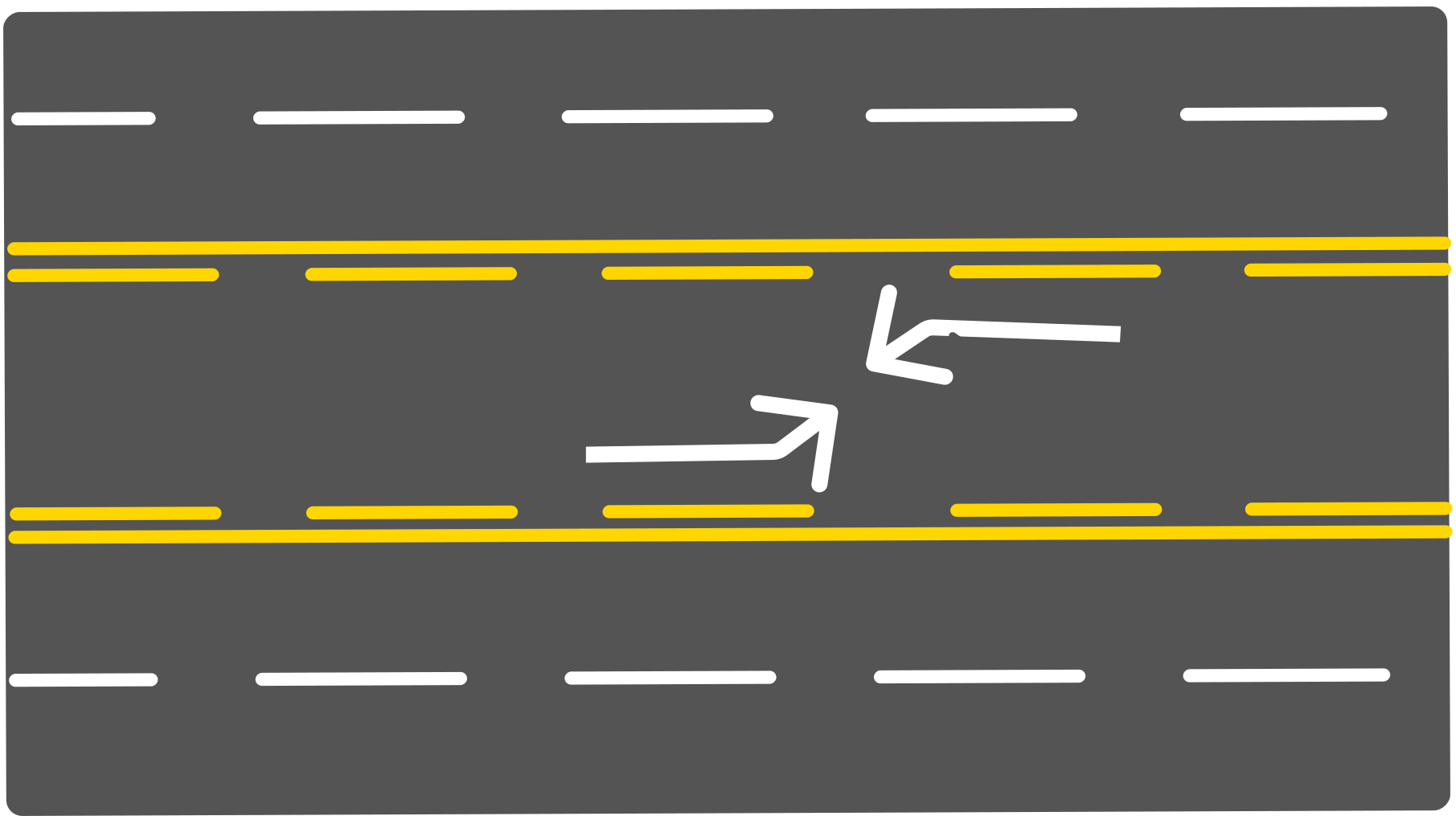 What is the primary use of a center turn lane?
Show answer
Answer: b) For preparing to turn left.
The center turn lane is used when preparing to turn left.
-
15. On a four-lane highway, when are you allowed to drive in the left lane?
Show answer
Answer: d) When passing or preparing to turn left.
On a four-lane highway, drive in the right lane except when passing or preparing to turn left.
-
16.
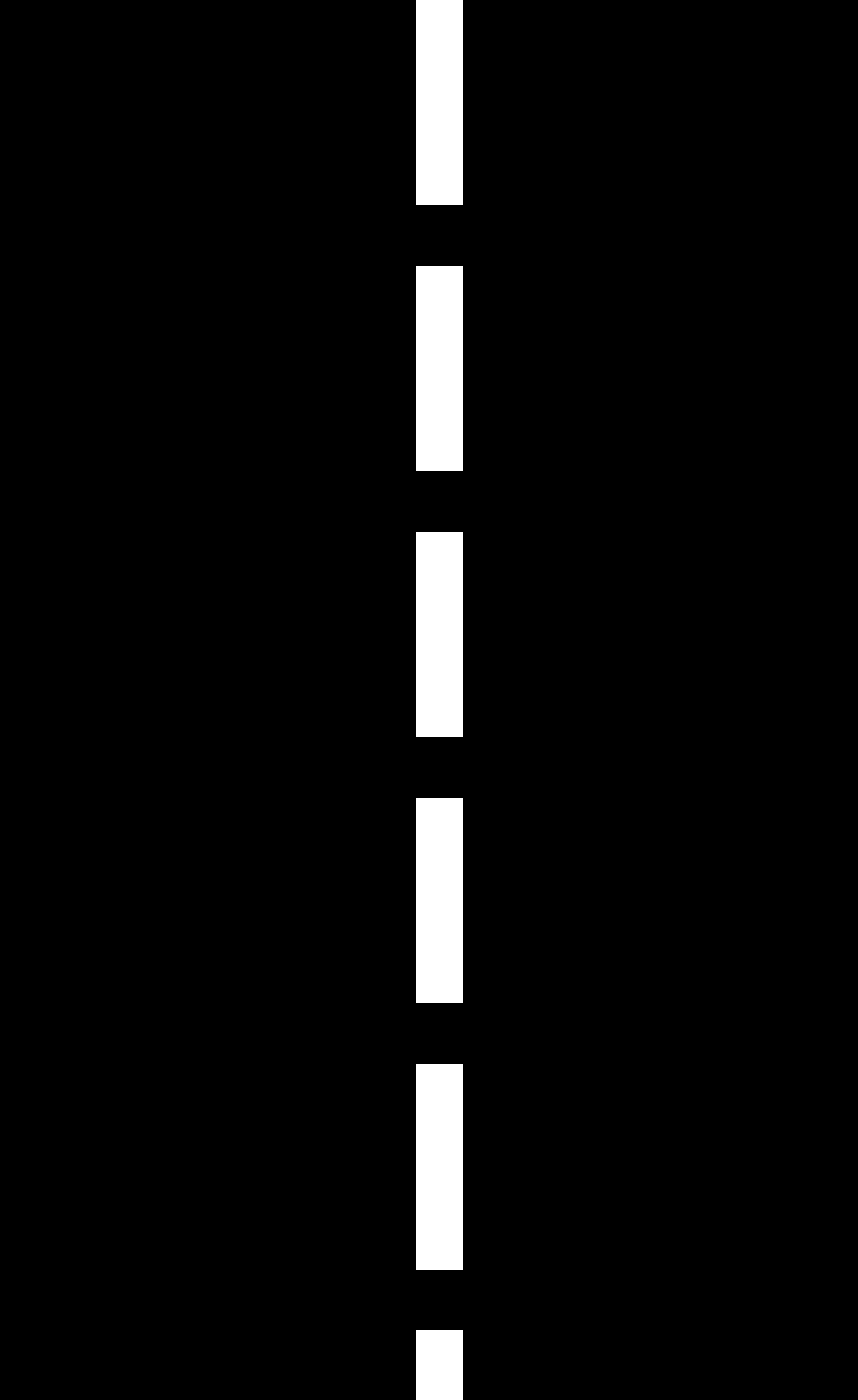 On interstates and four-lane highways, is passing on the right allowed?
Show answer
Answer: b) Yes, passing is allowed from both the left and right lanes.
On interstates and four-lane highways, passing is allowed from both the left and right lanes when divided by a broken white line.
-
17. What is the maximum speed limit on two-lane State and U.S. highways?
Show answer
Answer: b) 55 mph
The maximum speed limit on two-lane State and U.S. highways is 55 mph.
-
18. When turning around in a confined space (three-point turn), what is the first step?
Show answer
Answer: a) Start from the extreme right, signal, and turn sharply to the left.
Start from the extreme right side of the road, give the correct signal, and turn the steering wheel sharply to the left while inching forward.
-
19. What is the recommended behavior regarding funeral processions?
Show answer
Answer: d) Yield the right-of-way as a common courtesy.
Although not required by law, common courtesy is to yield the right-of-way to funeral processions.
-
20. Which child requires a belt-positioning booster seat?
Show answer
Answer: b) Children aged 4 to 7 who are under 4 feet 9 inches or 65 pounds.
Children at least four years old but under seven years old who are less than 4 feet 9 inches in height or who weigh less than sixty-five pounds must be properly secured in a belt-positioning booster seat system.
-
21. What should you do if an oncoming vehicle has blinding headlights at night?
Show answer
Answer: a) Dim your lights and look to the right side of the road.
If you meet a vehicle at night with bright or blinding headlights, the safest thing to do is to dim your lights and keep your eyes on the right side of the road.
-
22. What is the correct way to look while backing up?
Show answer
Answer: a) Look back over your shoulder.
Always look back over your shoulder while backing up. Never rely on your rearview mirror alone.
-
23.
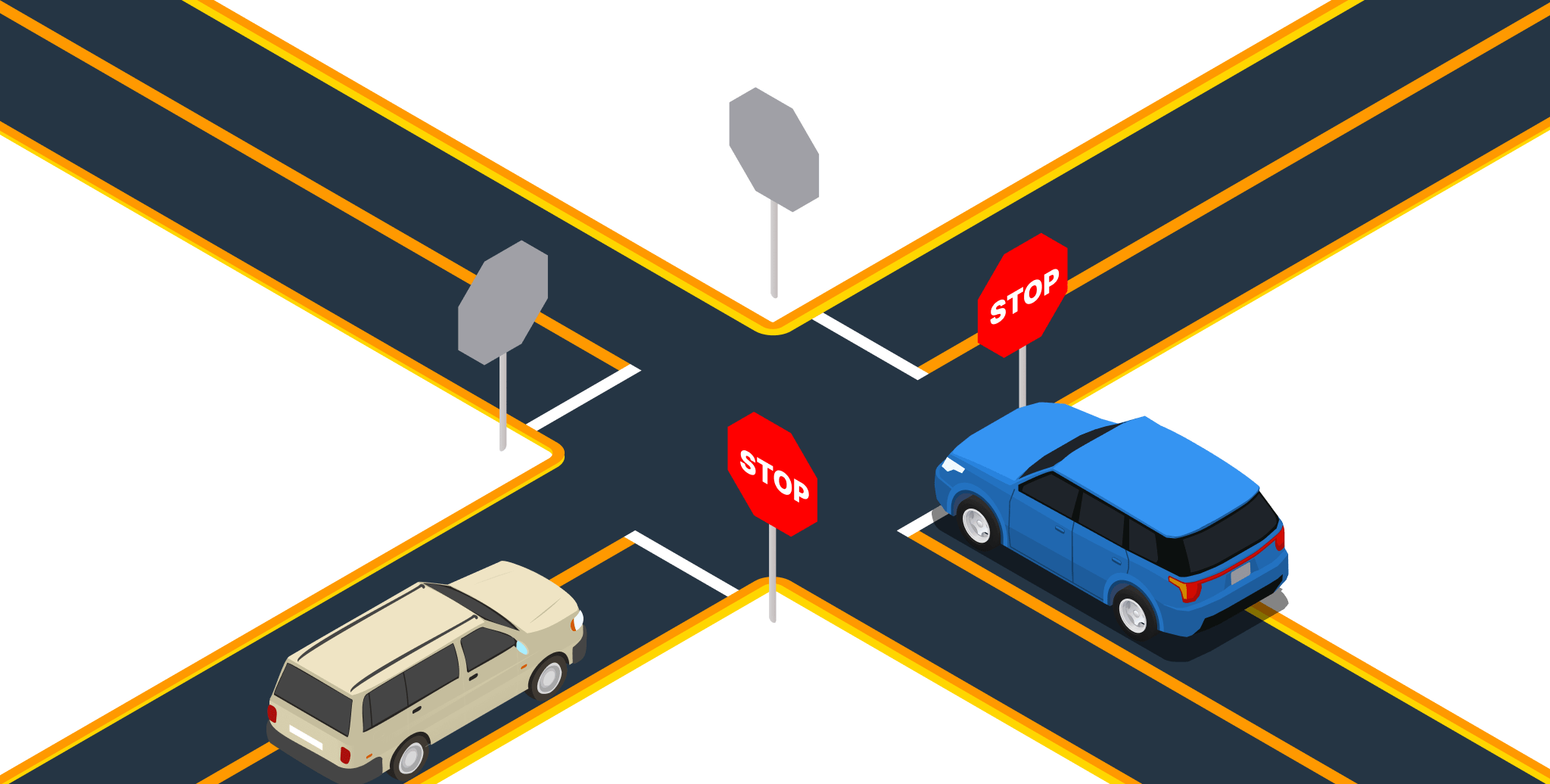 At a four-way stop, who has the right-of-way if vehicles arrive at different times?
Show answer
Answer: d) The first vehicle to arrive.
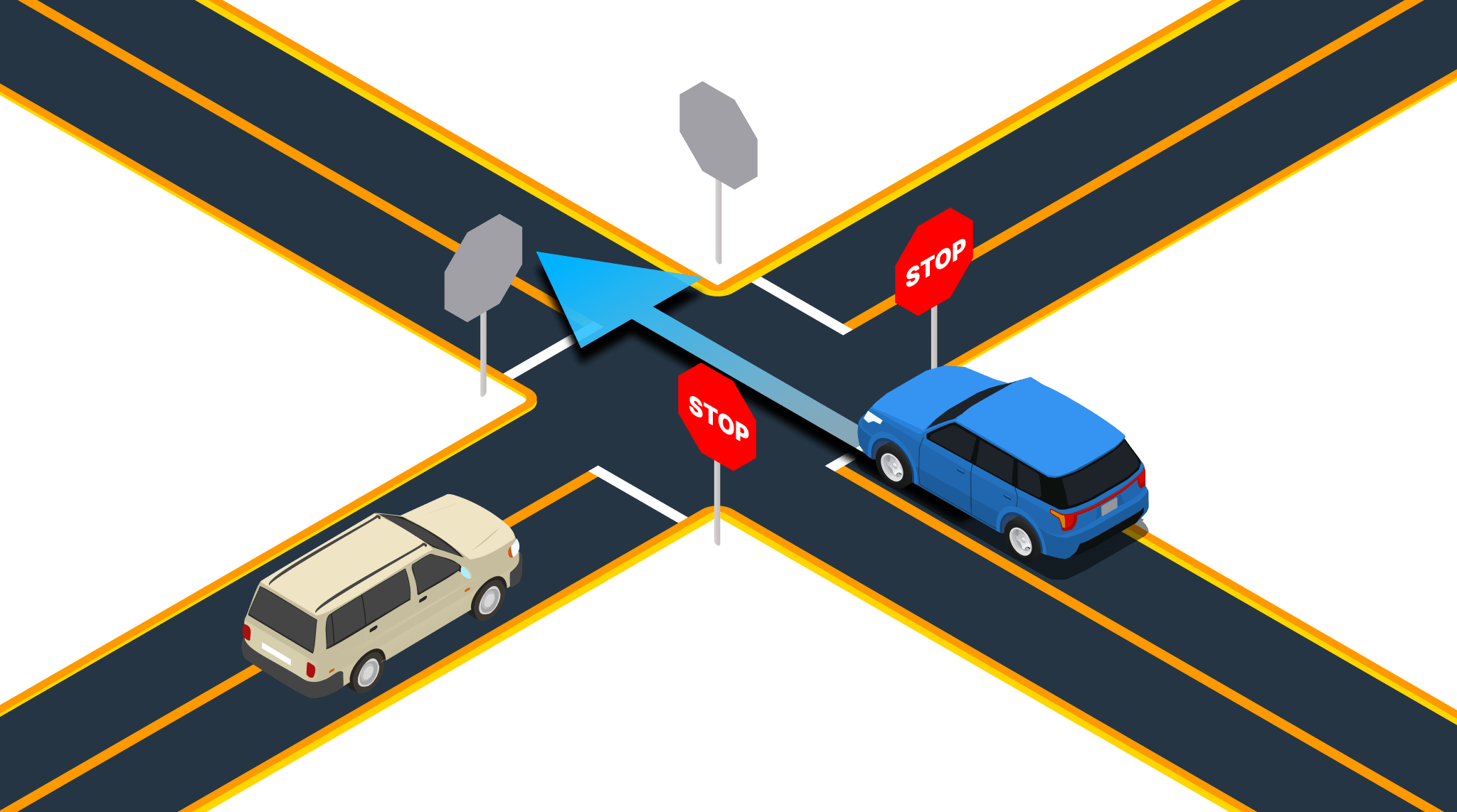 At a four-way stop, right of way is determined by which vehicle arrives first. The first vehicle to arrive has right-of-way.
-
24. Should you wear darkened glasses (sunglasses) while driving at night to reduce glare?
Show answer
Answer: a) No, it will further reduce your vision.
Never attempt to compensate for glare by wearing darkened glasses. At night, or on dark days, the use of such glasses will only further reduce your vision.
-
25. What number should you dial on a cellular phone to report a traffic emergency to the Mississippi Highway Patrol?
Show answer
Answer: c) The Highway Patrol dial code (*47).
To report an emergency traffic situation on a Mississippi highway or interstate, you should dial the Highway Patrol code (*47) on your cellular phone to connect to a dispatcher.
-
26.
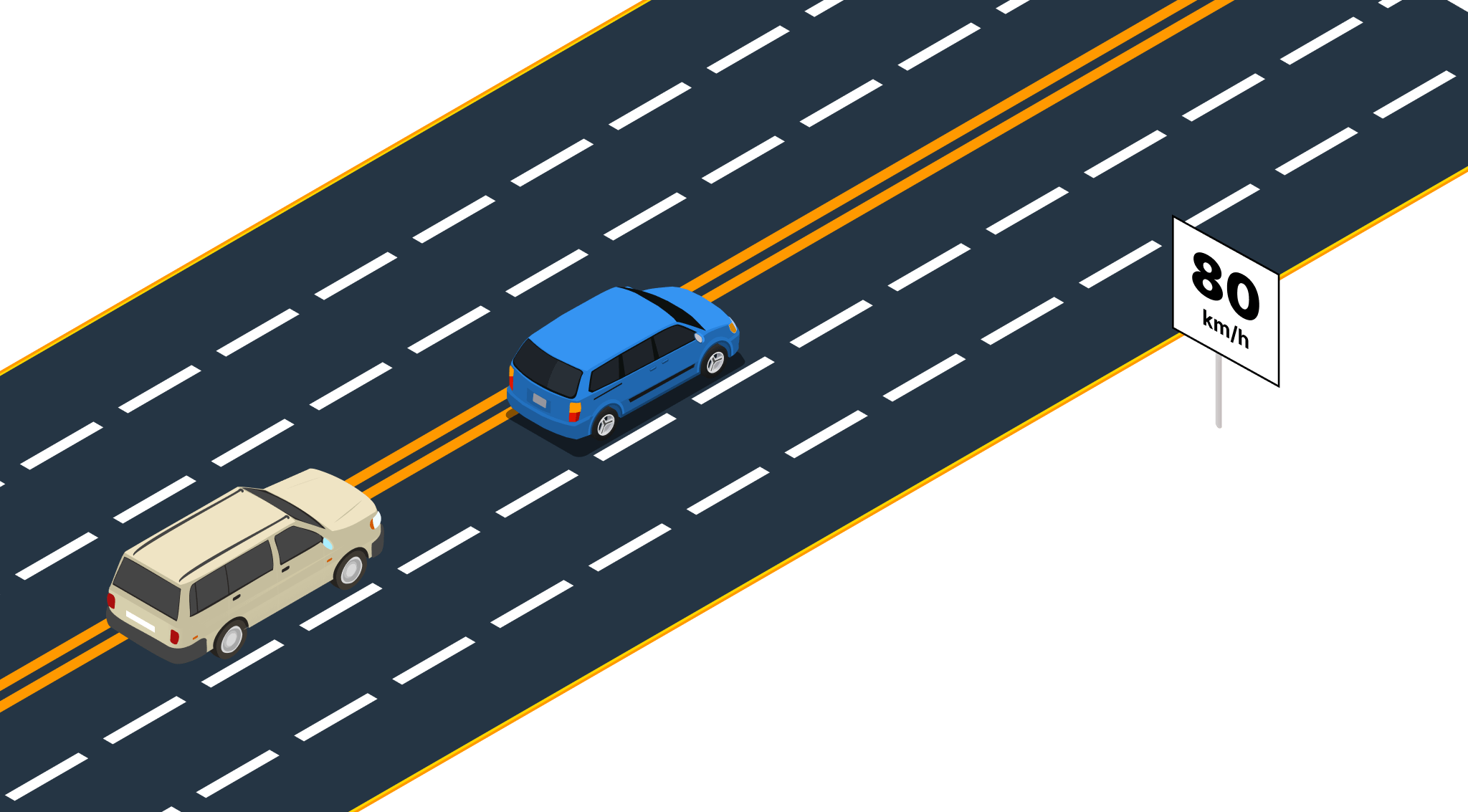
 Which lane should you use if you are driving slower than other traffic on an interstate?
Show answer
Answer: c) The right lane.
Slower traffic should always stay in the right lane.
-
27. When is it safe to return to the right lane after passing a large truck?
Show answer
Answer: a) When you can see the truck's front wheels in your rearview mirror.
Ensure you can see the entire front of the truck, specifically where the wheels meet the pavement, in your rearview mirror.
-
28.
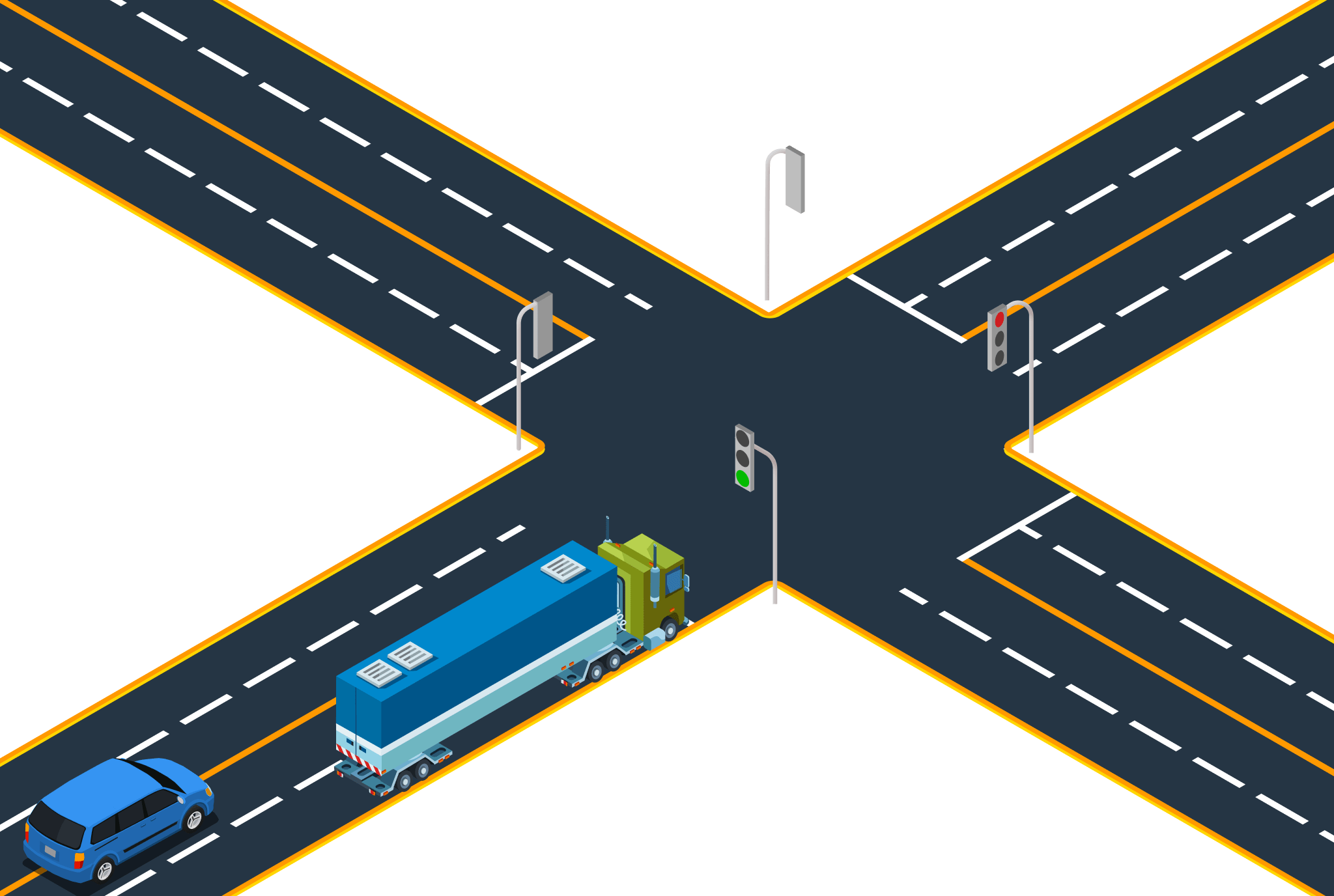
 Why should you avoid passing a large truck on the right at an intersection?
Show answer
Answer: c) The truck may swing left to make a wide right turn.
Trucks often swing wide to the left to execute a right turn; passing on the right puts you in the path of the turn.
-
29. If your car is disabled and you must walk for help, which side of the highway should you walk on?
Show answer
Answer: c) The left side, facing oncoming traffic.
Always walk on the left side facing oncoming traffic so you can see approaching vehicles.
-
30. In what format can a driver legally provide proof of insurance during a traffic stop?
Show answer
Answer: b) In electronic format on a cellular phone or electronic device.
Mississippi law allows drivers to show proof of insurance electronically using a smartphone or other mobile device.
Keep practicing in the app
Practice Test 1 is one of 10. The app has 255 more Mississippi questions, an exam simulator, and review of the questions you miss.


Free download · ★ 4.9 from 65 App Store ratings
Pass Guarantee Don't pass? Your next month is free.