

-
1. Why should you avoid sounding your horn close to a bicyclist?
Show answer
Answer: d) It may startle them, causing them to steer into your path.
Startling a bicyclist with a horn can cause them to swerve unpredictably into traffic. Only use the horn if there is a chance of a collision.
-
2. Why should you avoid driving alongside a large vehicle for long periods?
Show answer
Answer: a) It increases the chance of collision if the vehicle needs to swerve or change lanes.
Driving alongside a large vehicle increases collision risk if the truck needs to maneuver, as you may be in their blind spot.
-
3. What is a danger of following a large vehicle too closely?
Show answer
Answer: b) The driver cannot see you, and your view of the road ahead is blocked.
Following too closely (tailgating) puts you in the truck's rear blind spot and blocks your view of traffic ahead.
-
4. When yielding to an emergency vehicle, what should you avoid blocking?
Show answer
Answer: a) Intersections or driveways.
When pulling over for emergency vehicles, try to avoid blocking intersections or driveways.
-
5. Which parts of the roadway tend to freeze first in winter conditions?
Show answer
Answer: b) Bridges and overpasses.
Bridges and overpasses tend to freeze before other parts of the roadway.
-
6. How should you adjust your following distance for night driving conditions?
Show answer
Answer: c) Add at least one additional second.
For night driving, increase your following distance by adding at least one additional second.
-
7. What is the correct way to transport pets in a vehicle?
Show answer
Answer: d) Properly secured in a pet carrier or portable kennel.
Pets should be properly secured in a pet carrier or portable kennel to prevent distraction and injury.
-
8. Is it necessary to wear a safety belt if your vehicle has air bags?
Show answer
Answer: c) Yes, safety belts should always be worn.
Air bags are supplemental restraints. Safety belts must always be worn to properly position the body and maximize the air bag's benefits.
-
9. Why is the 2 and 10 o'clock hand position not recommended?
Show answer
Answer: c) It can be dangerous in vehicles equipped with air bags.
2 and 10 o'clock is not recommended because it can be dangerous in vehicles equipped with air bags.
-
10.
 What is the correct action at a red traffic light?
Show answer
Answer: b) Stop before entering the intersection and wait for green.
RED Traffic Light—This means stop before entering the intersection. You must wait behind the stop line, crosswalk, or intersection until the traffic light turns green.
-
11.

 What does a flashing yellow traffic light mean?
Show answer
Answer: c) Slow down and proceed with caution.
A flashing yellow traffic light means slow down and proceed with caution.
-
12.
 Identify this sign.
Show answer
Answer: c) Stop Sign Ahead.
This sign warns of a Stop Sign Ahead.
-
13.
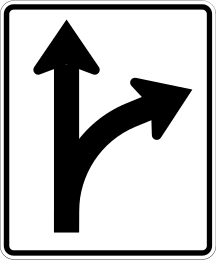 What options do you have in a lane with this sign?
Show answer
Answer: a) Turn right or go straight.
This sign allows drivers to go Straight or Turn Right.
-
14.
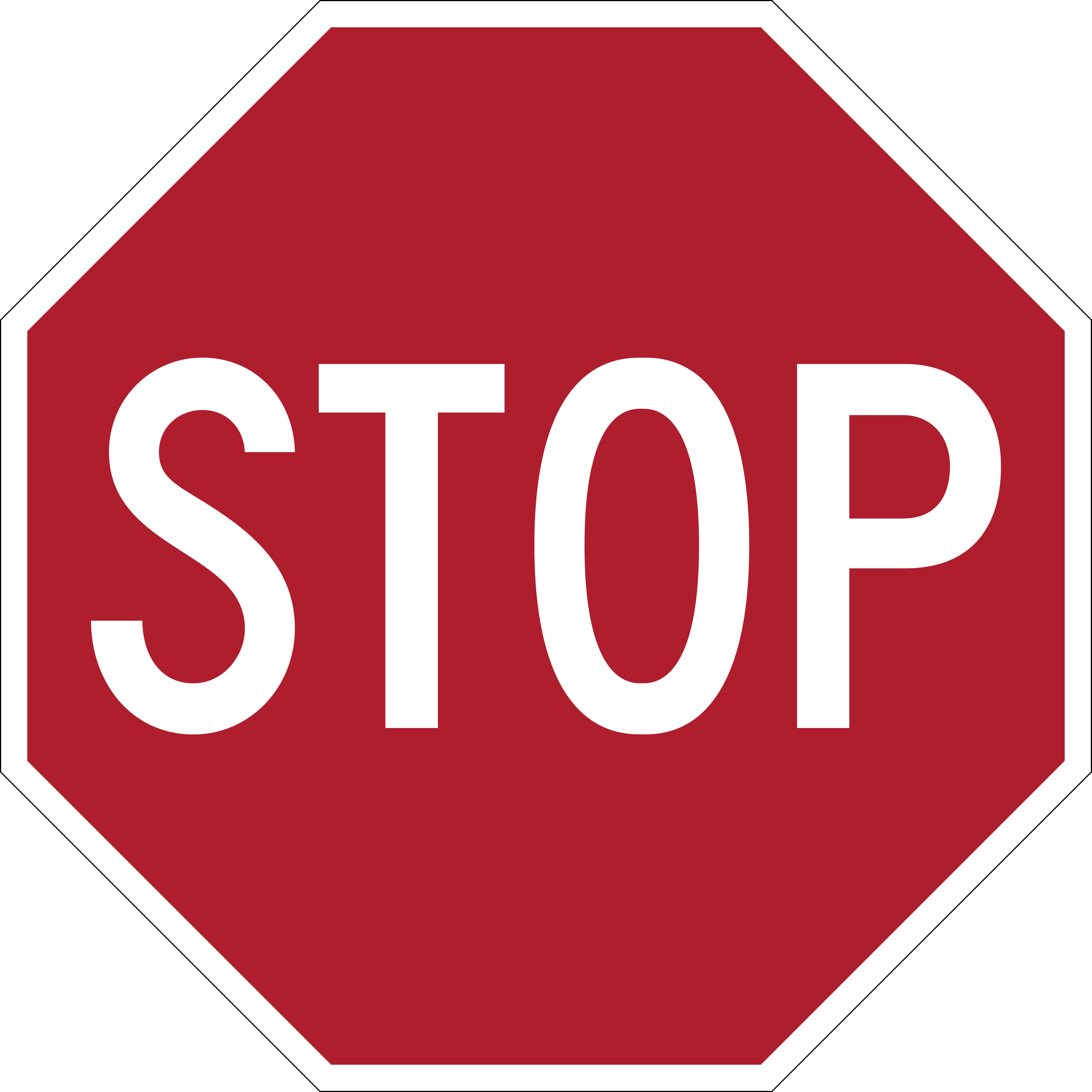 What is the shape and color of a stop sign?
Show answer
Answer: d) Red octagon (eight sides).
A stop sign has eight sides and is red with white letters.
-
15.
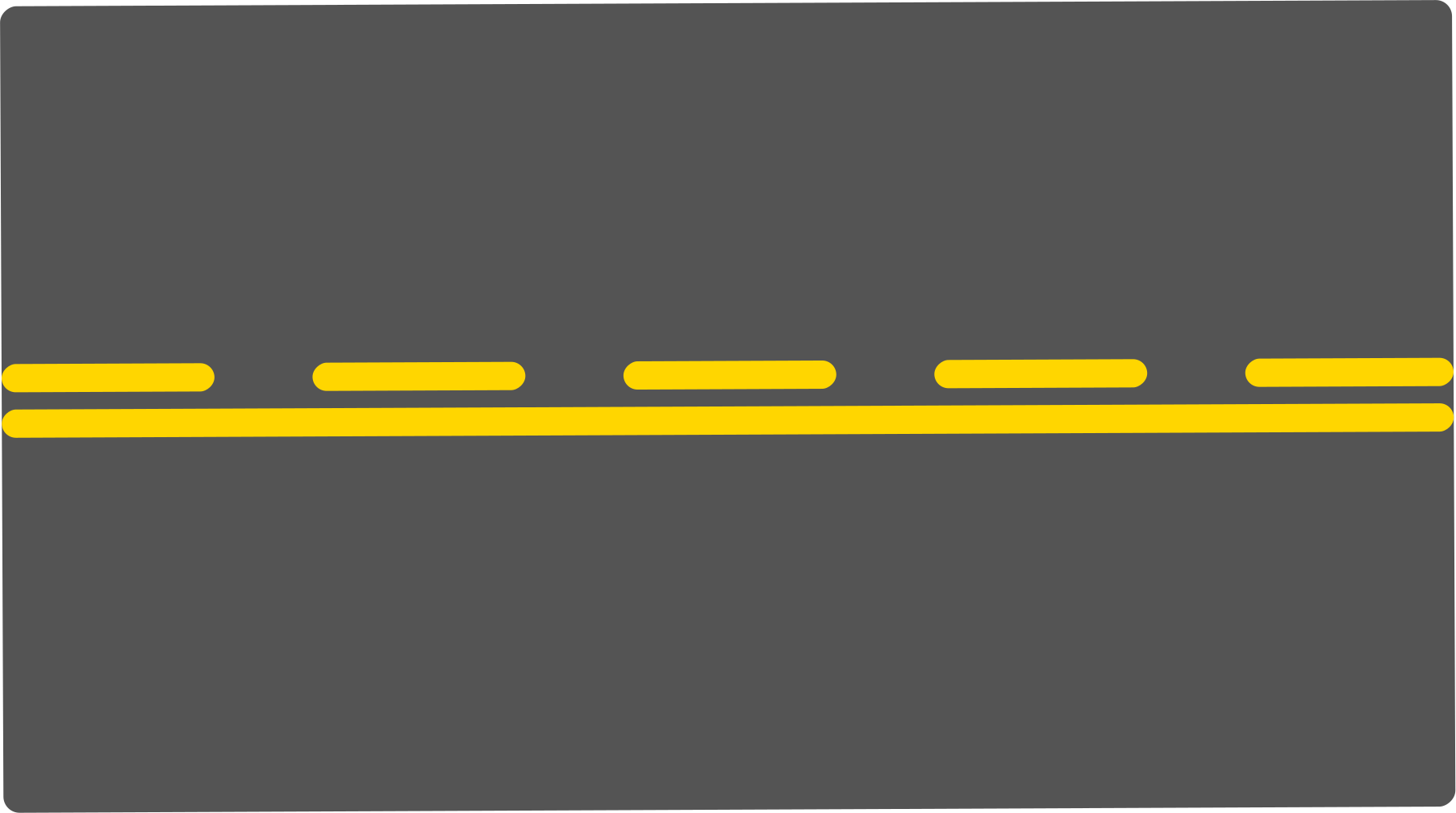 When can you pass on a road with a solid yellow line next to a broken yellow line?
Show answer
Answer: a) When the broken (dashed) line is on your side.
Passing is permitted when the dashed (broken) line is on your side.
-
16.
 What does a green traffic light indicate?
Show answer
Answer: b) Go through the intersection if it is clear to do so, with caution.
A green traffic light means you may go through the intersection if it is clear to do so, with caution.
-
17. Where should you look when making a turn?
Show answer
Answer: d) Through the turn to the farthest point possible along your path.
When turning, you should look through the turn to the farthest point possible along the intended path to ensure a smooth and safe maneuver.
-
18. How should you react to an approaching vehicle with an active turn signal?
Show answer
Answer: a) Do not turn just because the signal is active; wait until they actually start to turn.
Never assume another driver will turn just because their signal is active. They may have forgotten to cancel it or plan to turn later. Wait until they commit to the turn.
-
19.
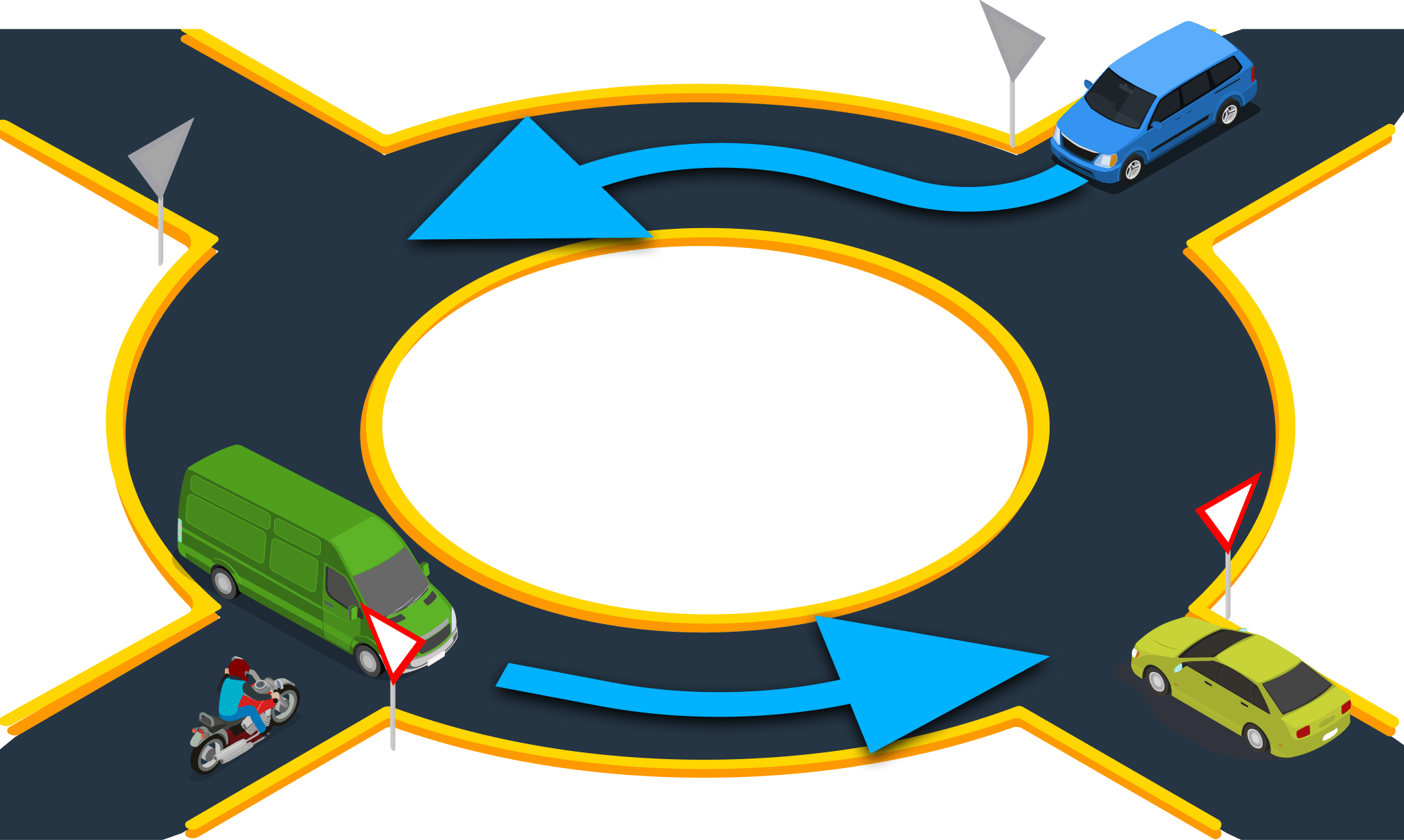 In which direction does traffic flow in a roundabout?
Show answer
Answer: b) Counterclockwise.
Vehicles travel counterclockwise around the raised center island in a roundabout.
-
20. What should you avoid doing when making a right turn?
Show answer
Answer: d) Swinging wide to the left before the turn.
When making a right turn, avoid swinging wide to the left before making the turn to prevent confusing other drivers or encroaching on other lanes.
-
21. What must you do when making a left turn?
Show answer
Answer: c) Yield to oncoming traffic.
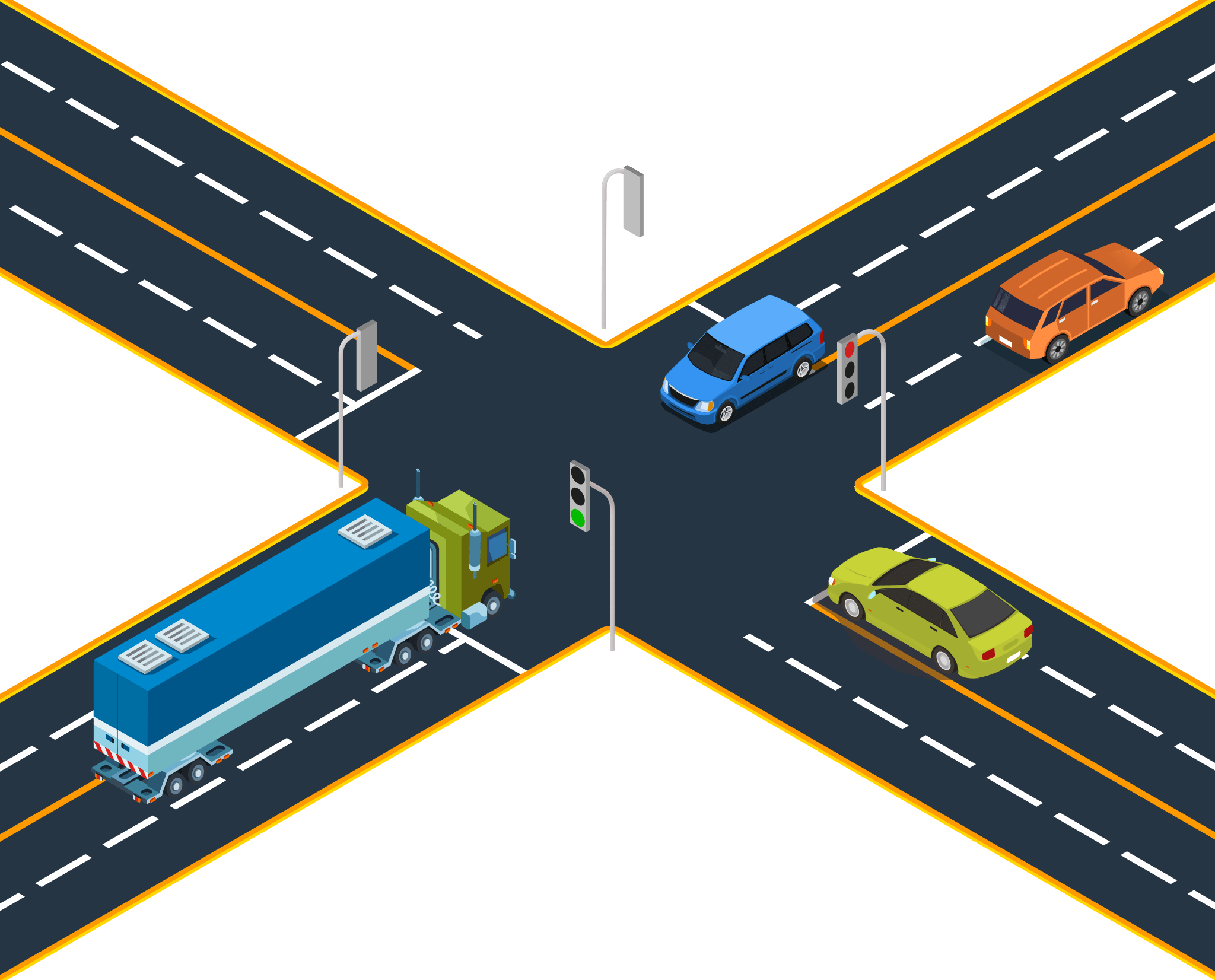
 When making a left turn, you are required to yield the right-of-way to oncoming traffic before completing the turn.
-
22.
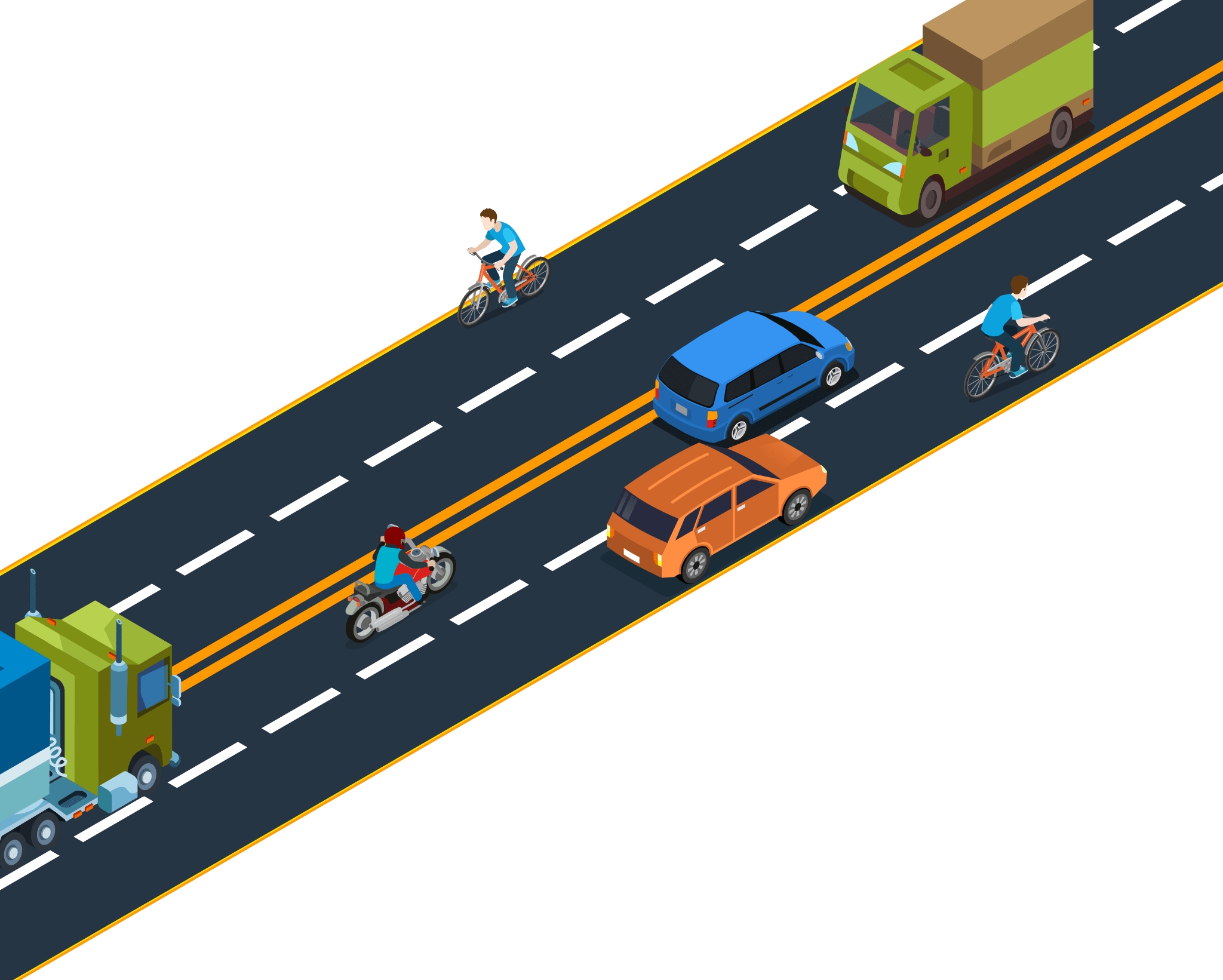 How should you check your blind spots before changing lanes?
Show answer
Answer: c) Turn your head and look over your shoulder in the direction you plan to move.
Check blind spots by turning your head and looking over your shoulder in the direction you plan to move.
-
23. If you see a 'Lane Closed Ahead' sign and traffic is backed up, what should you do?
Show answer
Answer: c) Stay in your current lane until you reach the point of merge.
In backed-up traffic, stay in your current lane until the merge point (Zipper Merge) to reduce congestion and danger.
-
24. Why should you be cautious even when you have the right-of-way at an intersection?
Show answer
Answer: d) Some road users may not yield the right-of-way or obey signals.
Do not rely on other road users to obey signals; be prepared to avoid a collision if they do not yield.
-
25. When should you not use your horn?
Show answer
Answer: c) When near blind pedestrians.
You should not use your horn when near blind pedestrians. Using your horn inappropriately could scare or anger another road user; it should only be used to communicate necessary information to other road users.
-
26. What is 'Braking Distance'?
Show answer
Answer: a) The time and distance it takes for your brakes to slow and stop your vehicle.
Braking distance is the time and distance it takes for your brakes to slow and stop your vehicle.
-
27. Why is it important to signal before changing direction?
Show answer
Answer: a) It gives other roadway users time to react to your movements.
An appropriate signal gives other roadway users time to react to your vehicle movements.
-
28. When must you be aware of what is happening around your vehicle?
Show answer
Answer: a) Before you start the vehicle and while you are driving.
Safety requires a continuous searching pattern. You must check your surroundings before you even start the engine and maintain this awareness throughout your entire drive.
-
29. How should you properly use an anti-lock braking system (ABS) in an emergency?
Show answer
Answer: c) Press the brake pedal as hard as you can and maintain constant pressure.
When using ABS, press the brake pedal hard and keep applying constant pressure. Do not pump the brakes.
-
30. In which of the following scenarios might you need to accelerate to avoid a collision?
Show answer
Answer: c) When another vehicle is about to hit you from behind or the side.
While braking or steering are common ways to avoid a crash, accelerating may be necessary if another vehicle is about to strike your vehicle from the side or from behind.
Keep practicing in the app
Practice Test 1 is one of 10. The app has 264 more South Carolina questions, an exam simulator, and review of the questions you miss.


Free download · ★ 4.9 from 65 App Store ratings
Pass Guarantee Don't pass? Your next month is free.